First Steps Through the Rainforest
Cool mist, towering ancient trees and colobus monkeys overhead.

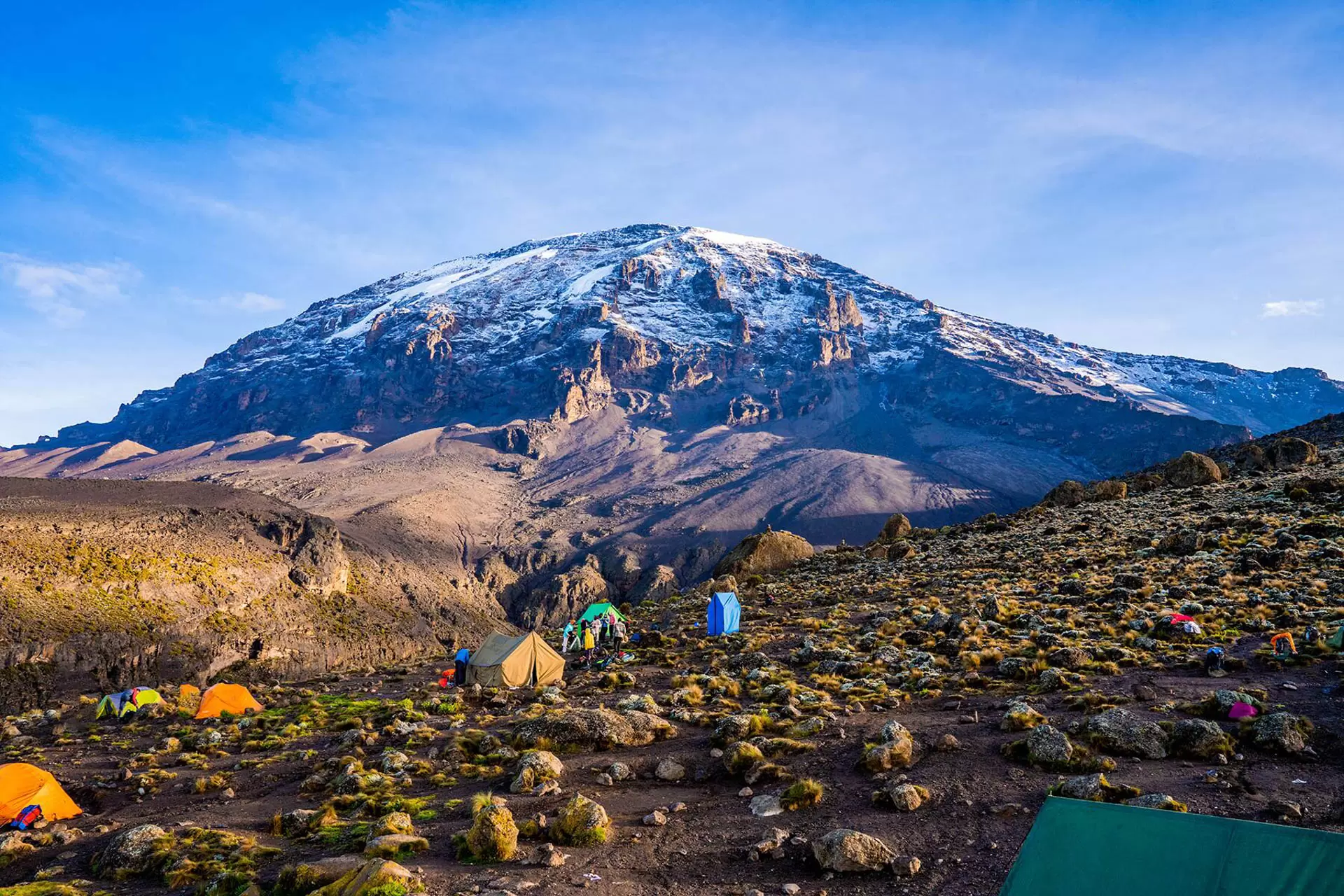
Conquer the Roof of Africa — Uhuru Peak, 5,895m. Expert-guided Kilimanjaro hiking and trekking on all 6 routes with WFR-certified guides, a 98% summit success rate, and 100% Tanzanian-owned operations.
To climb Mount Kilimanjaro is to embark on one of the world's greatest adventure treks. Africa's highest peak and the world's tallest free-standing mountain — a colossal stratovolcano rising 5,895 metres from the Tanzanian savannah.
Whether you call it climbing Kilimanjaro, hiking Kilimanjaro, or a Kilimanjaro trek, the experience is the same: five climate zones, from tropical rainforest to arctic summit, in a single unforgettable week.
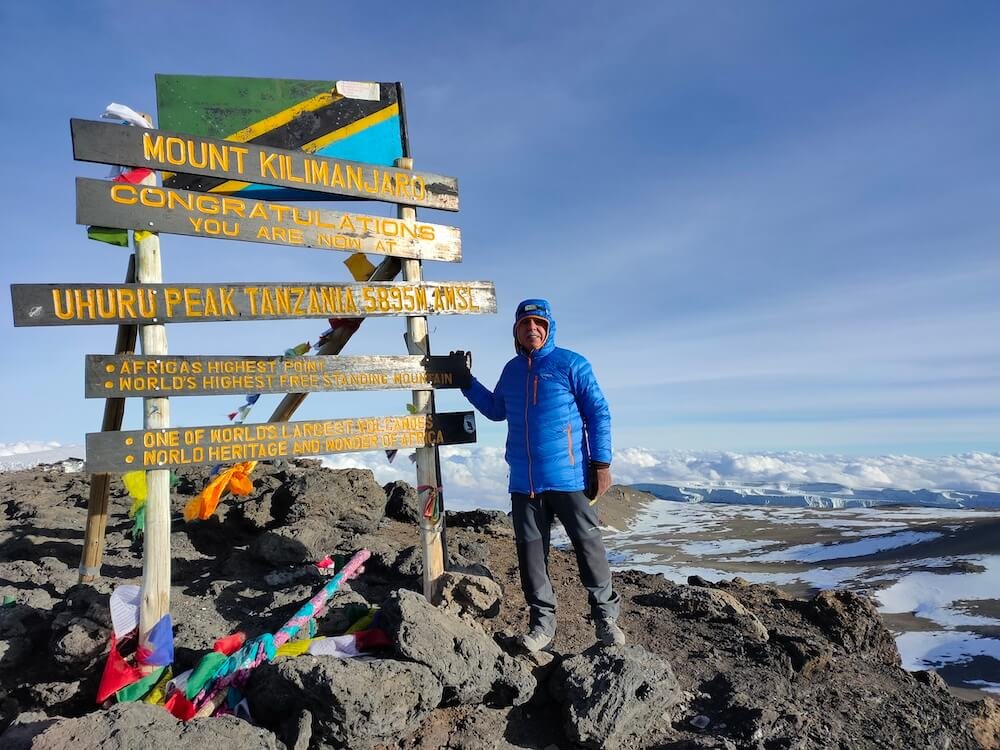
Kilimanjaro is formed by three distinct volcanic cones, each with its own geological personality.

Home to Uhuru Peak and the iconic glaciated crater rim. Covered in perpetual snows and ice cliffs, Kibo is the tallest of the three cones and the ultimate destination for every Kilimanjaro trekker. The summit glaciers, though receding, remain one of Africa's most awe-inspiring natural features.
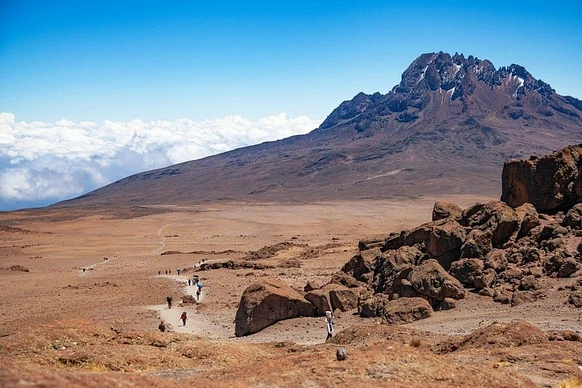
A dramatic, sheer-faced volcanic spire with jagged ridges and technical rock faces. Highly technical, wild, and rugged, Mawenzi offers stunning sunrises for those who dare approach its challenging terrain.
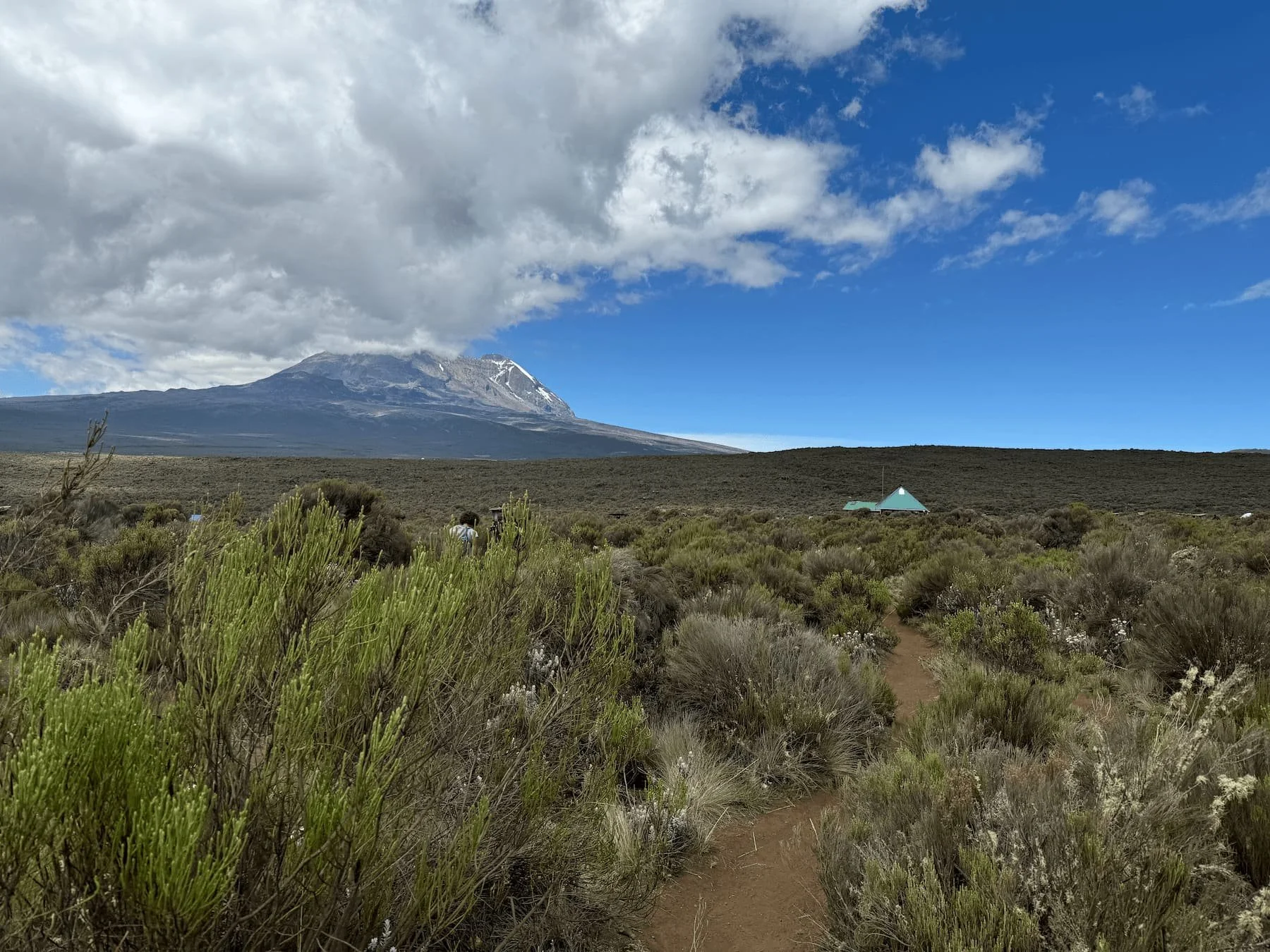
Kilimanjaro's oldest cone, collapsed millennia ago into a massive, sweeping high-altitude plateau. The Shira Plateau offers breathtaking panoramic views and unique alpine landscapes that form a key part of the Lemosho and Machame route experiences.
Climbing Mount Kilimanjaro is equivalent to trekking from the equator to the Arctic poles in a single week.
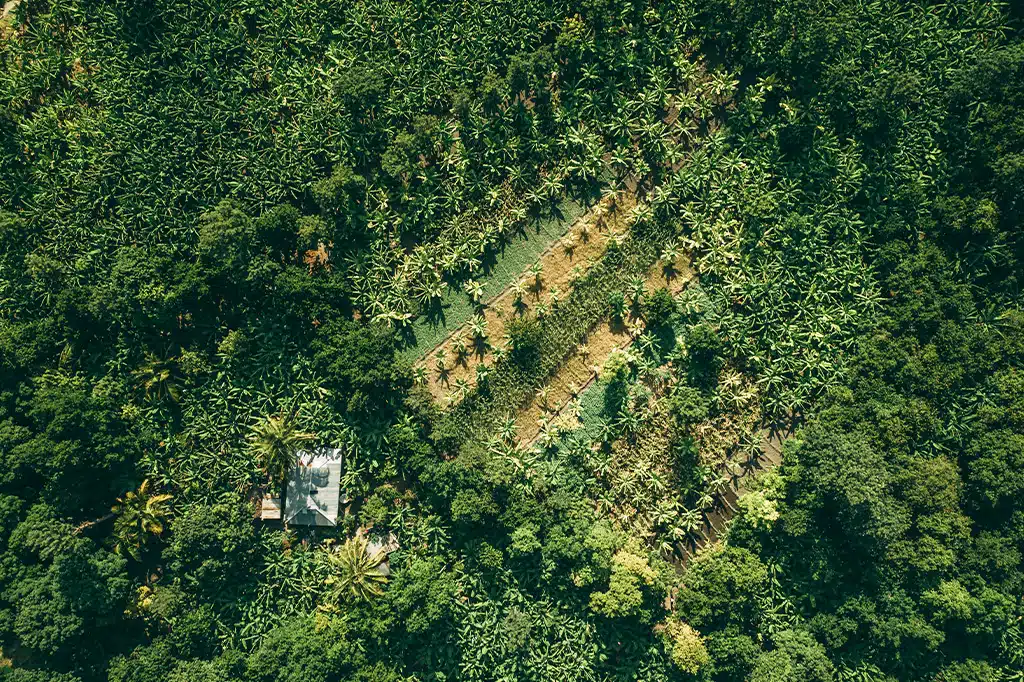 800M – 1,800M
20°C – 30°C | Warm & Tropical
800M – 1,800M
20°C – 30°C | Warm & Tropical
Fertile farmland stretches across the lower slopes where the Chagga people have cultivated coffee and bananas for generations. The tropical climate supports lush vegetation, traditional irrigation channels, and welcoming villages that mark the start of your Kilimanjaro adventure.
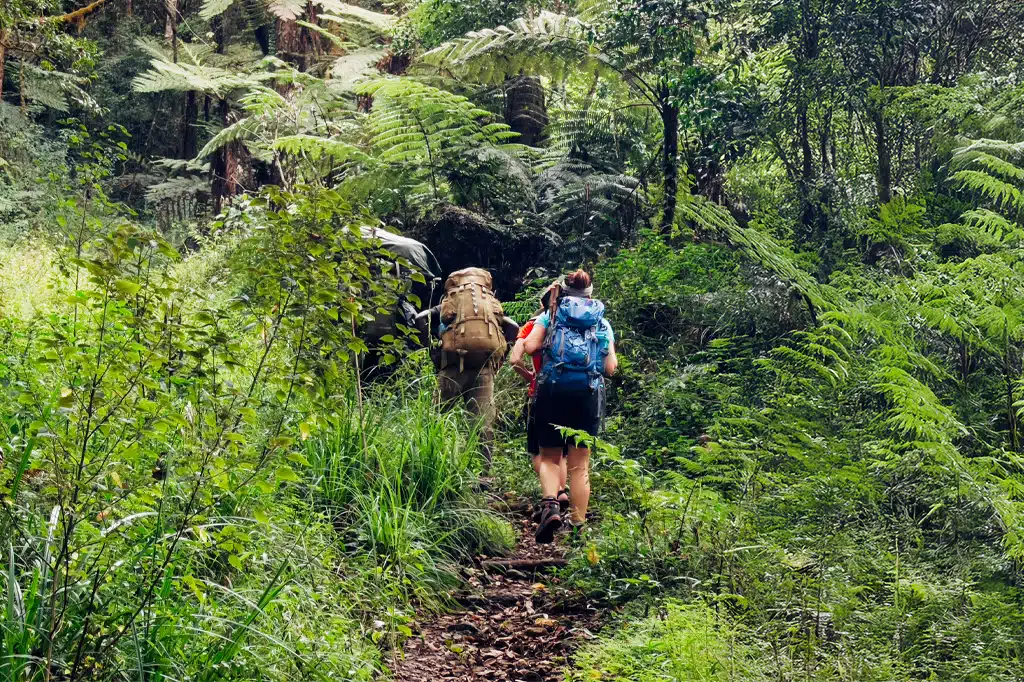 1,800M – 2,800M
10°C – 20°C | High Humidity
1,800M – 2,800M
10°C – 20°C | High Humidity
Lush montane forest enveloped in mist, home to black colobus monkeys, blue monkeys, and exotic bird species. Ancient trees draped in moss create an otherworldly canopy overhead as you ascend through clouds of condensation.
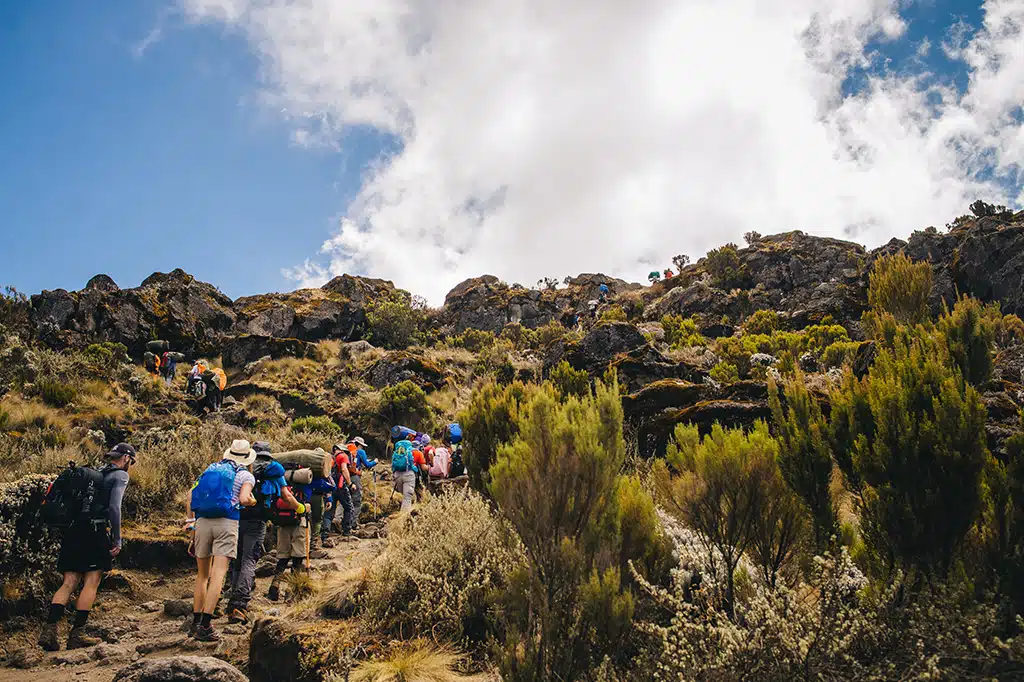 2,800M – 4,000M
5°C – 15°C | Cooler & Windy
2,800M – 4,000M
5°C – 15°C | Cooler & Windy
Giant groundsel and lobelia plants — found nowhere else on Earth — rise from golden tussock grass. Open skies reveal panoramic views of Kibo Peak and the plains far below as you traverse the dramatic heath zone.
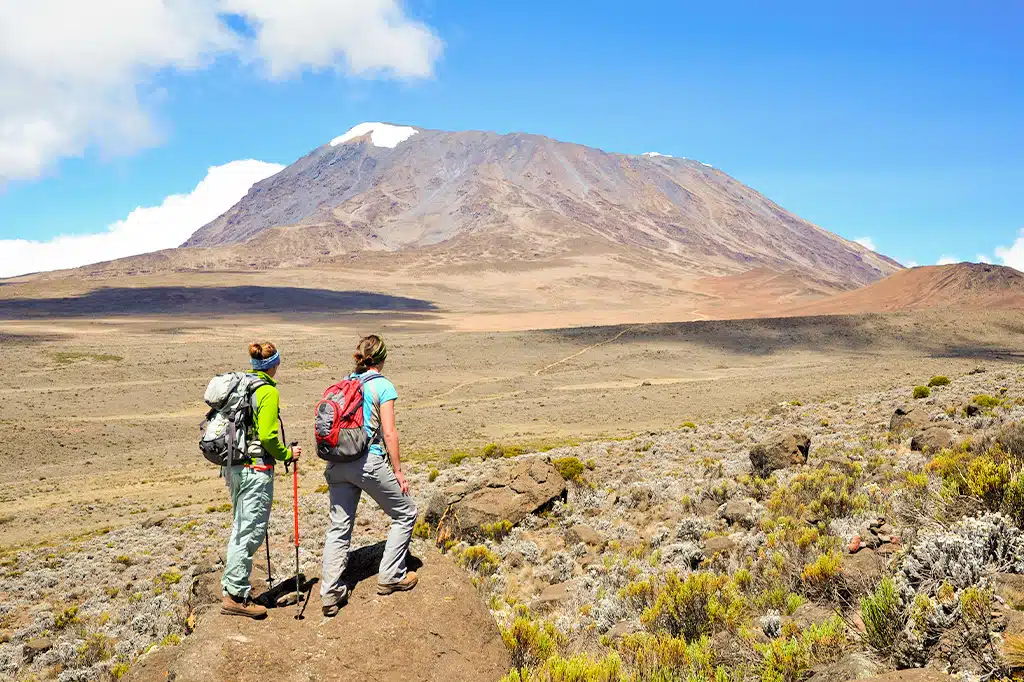 4,000M – 5,000M
-5°C – 25°C | Extreme Swings
4,000M – 5,000M
-5°C – 25°C | Extreme Swings
A stark high-altitude moonscape of volcanic rock and scree. Temperatures swing from scorching during the day to well below freezing at night. The air is thin and the landscape otherworldly — a barren expanse of ancient lava flows.
 5,000M – 5,895M
-20°C – 0°C | Sub-Zero Freezing
5,000M – 5,895M
-20°C – 0°C | Sub-Zero Freezing
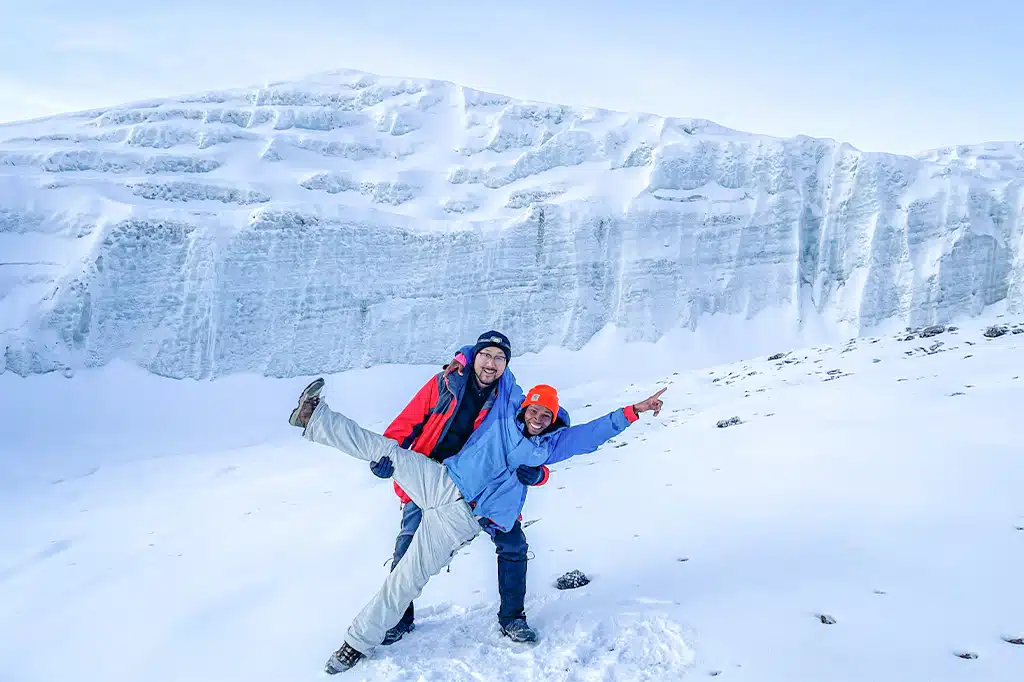
The final push through glacial ice fields and frozen rock to Uhuru Peak at 5,895 metres. Ice cliffs tower above as temperatures plunge well below freezing in this frozen kingdom — the ultimate reward for your Kilimanjaro trek.
Cool mist, towering ancient trees and colobus monkeys overhead.
Camp under a canopy of stars with Moshi twinkling far below.
Skies so pristine the Milky Way arcs overhead, completely unobstructed.
The first golden light hits the glaciers as you approach the summit.
Standing on the Roof of Africa — pure, indescribable achievement.
Ancient ice formations glowing blue in the early morning light.
Hugs, tears and joyful songs with guides and porters.
Every step down filled with pride and quiet knowledge that you did it.
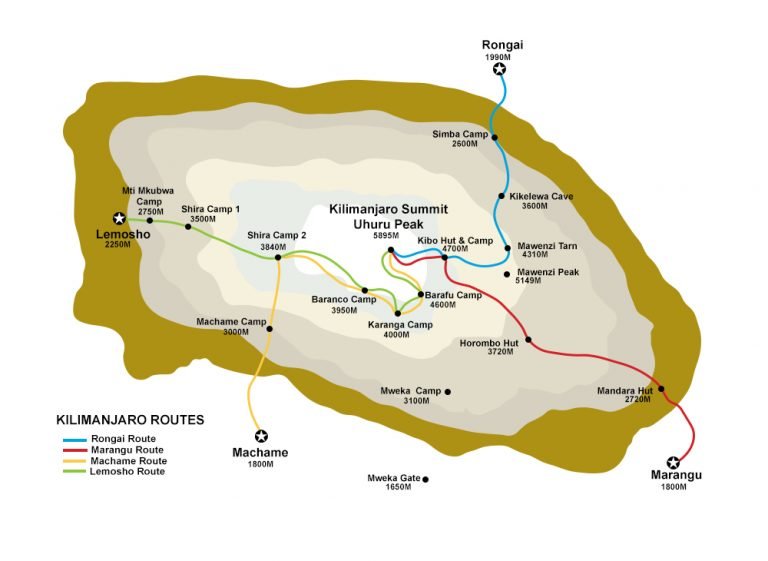
Discover every route to Uhuru Peak — from the lush rainforest of Lemosho to the remote wilderness of Northern Circuit. Each path offers a unique journey through five climate zones.
Expert-guided climbs across all routes. Each expedition led by WFR-certified guides.
Climb with a small team on a fixed-date itinerary. Lower cost, guaranteed departure, and the camaraderie of shared adventure.
Pulse oximetry and altitude assessments conducted twice daily.
Every lead guide holds Wilderness First Responder certification.
Supplemental oxygen, first-aid kits and Gamow bags on every climb.
Climb-high, sleep-low itineraries with careful pacing.
Satellite communications with immediate evacuation protocols.
Fair wages and proper gear for every porter.
Best for: First-time climbers, photographers.
Best for: Experienced trekkers, budget travellers.
Best for: All climbers, summit success priority.
Best for: Flexible travellers, avoiding crowds.
Everything you need on the mountain.
Build strength and stamina to summit.
Preparing for high altitude.
Climbing Kilimanjaro is the ultimate African adventure — a trek to the summit of the continent's highest peak at 5,895 metres. Unlike technical mountain climbs that require ropes and ice axes, hiking Kilimanjaro is a non-technical trek accessible to anyone with good fitness and determination. Every year, around 30,000 adventurers attempt the Kilimanjaro trek, and with Bush Lion Tours, 98% of them reach Uhuru Peak.
The cost of climbing Kilimanjaro depends on the route, duration, and group size. Group departures start from $1,550 per person for the 6-day Marangu Route and go up to $2,890 for the 9-day Northern Circuit. All prices include park fees ($1,098 per person), WFR-certified guides, meals, tented accommodation, and AMREF evacuation cover. Private Kilimanjaro trek options start from $1,950 for a fully customizable experience.
For the best hiking Kilimanjaro experience, the 8-day Lemosho Route offers the highest summit success rate (95%) with stunning scenery through all five climate zones. The 7-day Machame Route is the most popular Kilimanjaro trek for its diverse terrain, while the 5-day Marangu Route is the only route with hut accommodation. For the ultimate acclimatization, the 9-day Northern Circuit provides a 97% summit success rate — the best of any route.
The best seasons for climbing Kilimanjaro are January to March (warm, clear, fewer crowds) and June to October (dry season, best weather, busiest trails). April to May brings the long rains — lower prices but wetter conditions. Each season has its advantages: dry season offers the best weather, while shoulder seasons provide a more intimate Kilimanjaro trek experience.
No technical climbing experience is required for hiking Kilimanjaro. It is a high-altitude trek, not a technical mountaineering expedition. However, good cardiovascular fitness is essential — we recommend starting a 12-week training programme including regular hiking, cardio exercise, and strength training. Our guides set a comfortable "pole pole" (slowly slowly) pace that accommodates different fitness levels. Many people in their 60s and 70s successfully complete the Kilimanjaro trek every year.
Every year, fewer than 30,000 people stand on Uhuru Peak. You could be among them.