
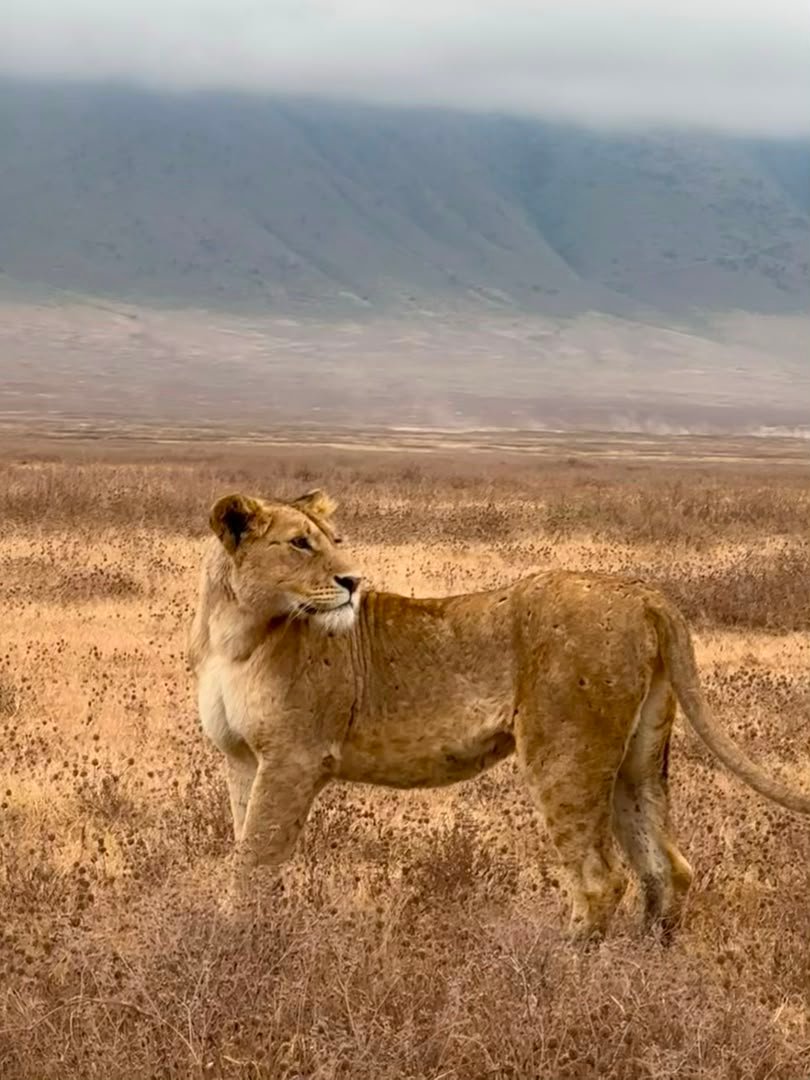
Ngorongoro Conservation Area
The Ngorongoro Crater is the world's largest intact volcanic caldera and one of Africa's most extraordinary wildlife arenas. Descending 600 metres to the crater floor, you enter a natural amphitheatre teeming with 25,000 animals — including the densest Big Five population on the continent.
Why Ngorongoro Is Special
The Ngorongoro Crater is the only place in Africa where you can see the Big Five — including the rare black rhino — in a single morning, all within the walls of an ancient volcano.
World's Largest Caldera
The Ngorongoro Crater is 260 km² of sheer drama — a 610-metre-deep volcanic bowl that shelters one of the highest concentrations of wildlife in Africa.
Densest Big Five
With approximately 25,000 animals in the crater, including around 30 black rhino, this is the best place in Tanzania to see all Big Five in a single day.
Maasai Culture
The Ngorongoro Conservation Area is unique — it is the only place in Tanzania where humans and wildlife coexist. Maasai pastoralists graze their cattle alongside zebras and wildebeest.
Overview
The Ngorongoro Conservation Area (NCA) covers 8,288 km² in the Arusha Region of northern Tanzania, encompassing a range of landscapes from volcanic highlands to the vast Serengeti plains. At its heart lies the Ngorongoro Crater — the world's largest intact volcanic caldera, formed approximately two to three million years ago when a massive volcano collapsed in on itself.
The crater floor covers 260 km² and sits 610 metres below the rim, creating a self-contained ecosystem that has evolved in relative isolation. The NCA was declared a UNESCO World Heritage Site in 1979 and remains one of the most visited wildlife areas in Africa, drawing over 500,000 tourists annually.
Unlike most national parks in Tanzania, the NCA allows the indigenous Maasai people to live and graze their cattle within its boundaries — a unique conservation model that recognises the deep cultural connection between the Maasai and this land.
Wildlife
The crater supports an estimated 25,000 large animals, making it one of the densest wildlife concentrations in Africa. The NCA is home to all of the Big Five, and the crater offers the best chance on the continent to see all five in a single game drive.
The crater's resident wildlife includes approximately 30 endangered black rhinos — the largest population in East Africa — making Ngorongoro the most important stronghold for this critically endangered species. Lion, elephant, buffalo, and hippo are all abundant on the crater floor. Cheetahs are occasionally spotted on the open grasslands, though they prefer the more open plains outside the crater.
Beyond the Big Five, the crater teems with wildebeest, zebra, Thompson's and Grant's gazelle, eland, waterbuck, warthog, and spotted hyena. The Lerai Forest on the crater floor provides habitat for baboons, bushbuck, and giant tuskers. Flamingos and pelicans gather on Lake Magadi, the alkaline lake at the crater's centre.
The Crater Floor Experience
Descending into the Ngorongoro Crater is one of the most dramatic moments of any Tanzania safari. The steep, winding road drops 600 metres down the crater wall, revealing a vast grassland amphitheatre dotted with animals. The floor is a mosaic of open grassland, acacia woodland, freshwater lakes, and soda lakes — all within a single enclosure.
Game drives on the crater floor typically last 4–5 hours, during which you may spot lion prides resting near the road, elephants browsing among the acacias, and a black rhino silhouetted against the grassland. The crater's compact size means animal sightings are almost guaranteed — even on a short visit, you are virtually certain to see all Big Five.
Bush Lion Tours Tip
For the best chance of seeing black rhino, head to the eastern side of the crater floor near the Lerai Forest early in the morning. Rhinos are most active during the cooler hours and often rest in the open grasslands where they are easier to spot. Your guide will know the best spots.
Maasai Communities
The NCA is the only conservation area in Tanzania where the Maasai people continue to live alongside wildlife. The Maasai have inhabited these lands for centuries, and their traditional way of life — centred on cattle herding — is deeply intertwined with the landscape.
Visitors can arrange a cultural visit to a Maasai boma (homestead) to learn about traditional beadwork, cattle management, and the challenges of coexisting with predators. These visits are a powerful reminder that conservation in Africa is not just about wildlife — it is about people too.
Game Drive Rules
The NCA imposes strict rules to protect the crater's fragile ecosystem:
- Time Limit: Visitors are permitted a maximum of 6 hours on the crater floor. This reduces disturbance to wildlife and limits vehicle congestion.
- No Off-Road Driving: Vehicles must remain on designated tracks to prevent erosion and habitat damage.
- No Night Drives: All game viewing must occur during daylight hours (6:00 AM – 6:00 PM).
- Picnic Lunches: Designated picnic sites are available on the crater floor — no littering is permitted.
- Group Size: Vehicles must maintain a respectful distance from animals and avoid crowding around sightings.
Best Time to Visit
The Ngorongoro Crater is a year-round destination, but the best time depends on your interests:
- June – October (Dry Season): Best for general game viewing. Animals concentrate around water sources, making them easier to find. Vegetation is shorter, improving visibility. This is peak season — expect more vehicles on the crater floor.
- November – May (Green Season): Lush green landscapes, fewer tourists, and lower lodge rates. The calving season in the southern Serengeti (January–March) overlaps with the NCA, attracting large herds of wildebeest. Birding is excellent during this period.
- February – March: Wildebeest calving on the NCA plains draws predators in large numbers — a spectacular time for predator-prey interactions.
Lodges on the Rim
Several lodges sit perched on the crater rim, offering breathtaking views down into the caldera. Waking up to the sight of the crater at dawn is one of the most memorable experiences in African safari travel.
- Luxury: &Beyond Ngorongoro Crater Lodge, The Ngorongoro Serena Safari Lodge, and Elewana The Manor at Ngorongoro offer world-class service with stunning crater views. Rates from $800–$2,000+ per person per night.
- Mid-Range: Ngorongoro Wildlife Lodge and Ngorongoro Sopa Lodge provide comfortable accommodation with excellent crater views. Rates from $350–$600 per person per night.
- Budget: Public campsites are available within the NCA for travellers on a tighter budget.
Conservation Success
The Ngorongoro Crater is one of the great conservation success stories of the 20th century. The crater's enclosed ecosystem has allowed wildlife populations to recover and thrive under strict protection. The black rhino population, which was devastated by poaching in the 1970s and 1980s, has gradually recovered thanks to intensive anti-poaching patrols and the crater's natural isolation.
The unique coexistence model — where Maasai pastoralists share the land with wildlife — has become a model for conservation across Africa. The NCA demonstrates that wildlife protection and human livelihoods are not mutually exclusive but can be mutually reinforcing.
Getting There
The Ngorongoro Conservation Area is located approximately 180 km northwest of Arusha, a drive of about 3–4 hours. The most common approach is to fly into Kilimanjaro International Airport (JRO) or Arusha Airport and drive to the crater, often as part of a larger safari itinerary including the Serengeti and Tarangire.
Self-drive is possible but not recommended — the road to the crater rim is steep and winding, and a professional guide greatly enhances the experience with knowledge of the wildlife and ecology. Most visitors access the crater as part of a guided safari with a Tanzanian tour operator.
Explore More Destinations
Discover Tanzania's other world-class safari parks and conservation areas.
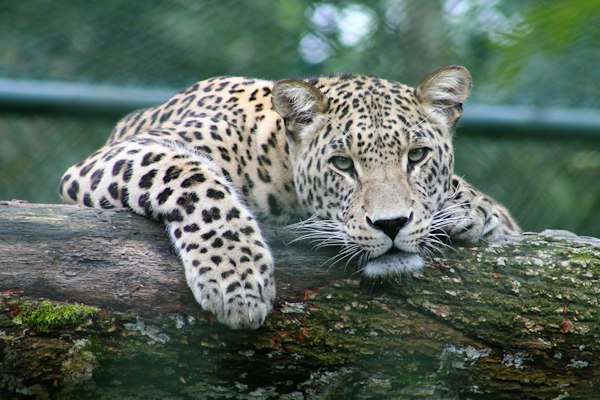
Serengeti National Park
The endless plains — home to the Great Migration, Big Five, and the largest concentration of predators in Africa.
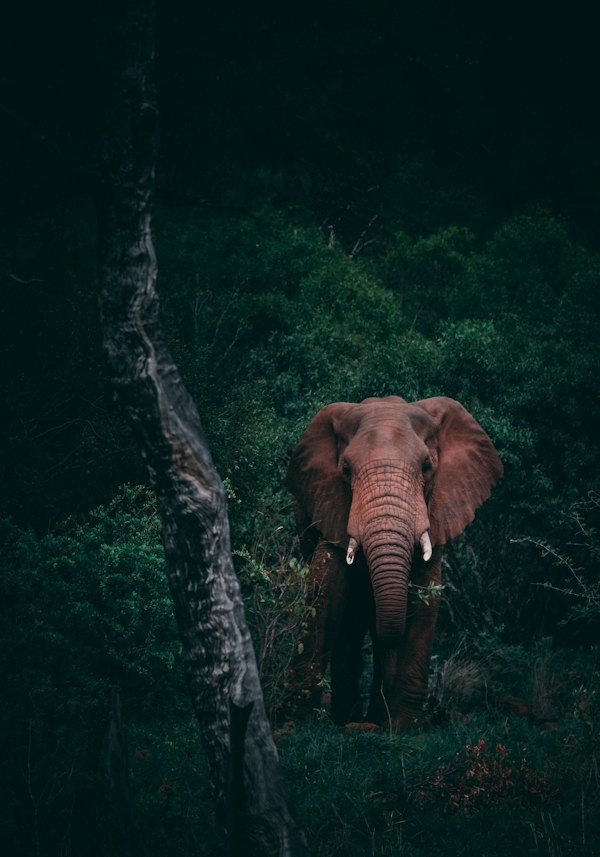
Tarangire National Park
Tanzania's most underrated park — massive elephant herds, baobab landscapes, and 550 bird species.
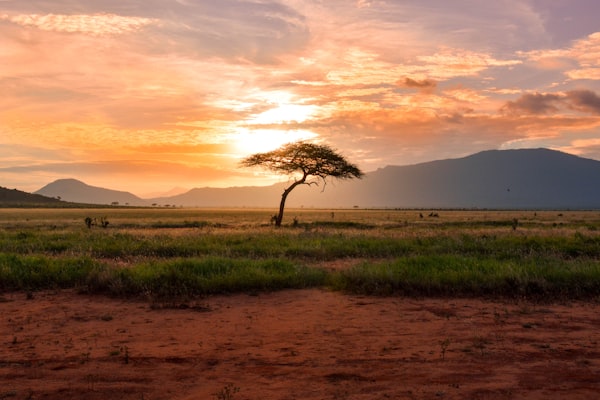
Lake Manyara National Park
Home to tree-climbing lions, flamingo flocks, and lush groundwater forest on the Rift Valley escarpment.
Ready to Descend into Ngorongoro?
Let us design a personalised Ngorongoro itinerary — from a single-day crater visit to a multi-park circuit including the Serengeti and Tarangire. Your African safari starts here.