One of the most common questions we hear from travellers is: how much does a Tanzania safari cost? The answer depends on many factors — the duration of your trip, the parks you visit, the level of accommodation, and the time of year. But with some clear information, you can plan a safari that fits your budget without sacrificing the experience.
This guide breaks down the real costs of a Tanzania safari, from budget options to luxury experiences, so you can make an informed decision about where to invest your money and where you can save.
Safari Cost Ranges
Tanzania safari costs can be broadly divided into three categories. These are per-person, per-day costs and include accommodation, game drives, park fees, meals, and guide services.
Budget safari: $150 to $250 per person per day. This category includes basic tented camps, shared game drives, and simple but clean accommodation. Budget safaris are not about luxury — they are about getting you into the wild and providing a genuine safari experience at an affordable price. Expect shared bathrooms in some camps, basic meals, and simpler vehicles.
Mid-range safari: $300 to $500 per person per day. This is the sweet spot for most travellers. Mid-range safaris include comfortable tented camps and lodges with private bathrooms, good food, and private game drives in a dedicated vehicle. You get excellent wildlife viewing with a good level of comfort and service.
Luxury safari: $600 to $1,500+ per person per day. Luxury safaris include top-tier lodges and camps with exquisite suites, gourmet dining, private guides, and exclusive experiences like balloon safaris and walking safaris. These are the lodges you see in travel magazines — Singita, andBeyond, Four Seasons, and similar properties.
What Affects Safari Price?
Several factors influence the final cost of your safari. Understanding these will help you make smart choices about where to spend and where to save.
Park fees are the single largest fixed cost in any Tanzania safari. Every national park charges entry fees, and these are set by the government and non-negotiable. The Serengeti charges approximately $70 per adult per day, Ngorongoro Crater charges approximately $70 per adult per day plus a $60 vehicle fee, and Tarangire charges approximately $53 per adult per day. These fees are included in every safari package but represent a significant portion of the total cost.
Accommodation is the most variable cost. Budget camps may charge $50 to $100 per night, while luxury lodges can charge $500 to $2,000 or more per night. The difference in comfort, service, and location is significant, and this is where the biggest price differences between safari categories occur.
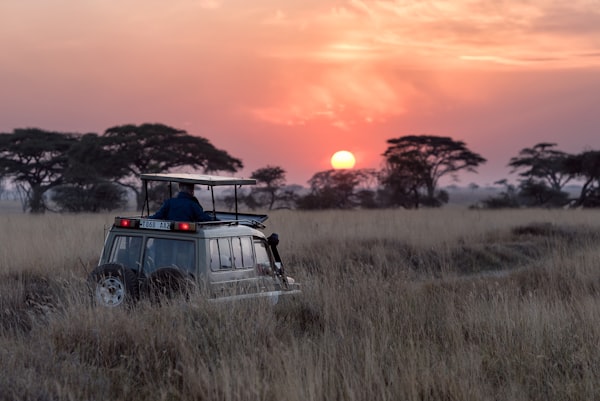
Vehicle and guide costs are shared among the passengers in a private safari. A custom-built 4x4 Land Cruiser with a pop-up roof and an English-speaking guide typically costs between $250 and $400 per day. In a shared group safari, this cost is divided among all passengers, which is why larger groups enjoy lower per-person rates.
Duration matters because longer safaris spread fixed costs like transport over more days. A 7-day safari typically offers better per-day value than a 3-day safari because the transfer costs and park fees are distributed across more days of game viewing.
Season affects prices significantly. Peak season from June to October commands the highest lodge rates, while the green season from April to May offers discounts of 30 to 50 percent at many properties. The shoulder seasons of June and November offer a good balance of quality and value.
Park Fee Breakdown (Per Adult Per Day)
Serengeti: $70 conservation fee
Ngorongoro Crater: $70 crater fee + $60 vehicle fee
Tarangire: $53 conservation fee
Lake Manyara: $45 conservation fee
Nyerere (Selous): $75 conservation fee
Ruaha: $75 conservation fee
Sample 7-Day Budget vs Luxury Itinerary
To give you a clear picture of how costs compare, here is a side-by-side breakdown of a similar 7-day itinerary at two different price levels.
Budget 7-Day Safari ($150 to $200 per day):
- Day 1-2: Tarangire — budget tented camp, shared game drives ($80 per night)
- Day 3-4: Serengeti — basic tented camp, shared game drives ($100 per night)
- Day 5-6: Ngorongoro — public campsite or basic lodge ($70 per night)
- Day 7: Transfer to Arusha
- Includes: Park fees, basic accommodation, shared vehicle, guide, meals
- Total estimate: $1,050 to $1,400 per person
Luxury 7-Day Safari ($800 to $1,200 per day):
- Day 1-2: Tarangire — luxury lodge, private game drives ($600 per night)
- Day 3-5: Serengeti — luxury tented camp, private game drives ($800 per night)
- Day 6: Ngorongoro Crater — luxury rim lodge ($900 per night)
- Day 7: Transfer to Arusha or onward travel
- Includes: Park fees, luxury accommodation, private vehicle, private guide, premium meals, drinks
- Total estimate: $5,600 to $8,400 per person
The difference is dramatic, but both options deliver the same wildlife — the same elephants, lions, and landscapes. The luxury option simply wraps the experience in higher-end accommodation and more personalised service.
Hidden Costs to Watch For
When comparing safari prices, make sure you know what is included and what is not. Some operators advertise low prices but exclude important items that add up quickly.
Park fees should always be included in your safari price. If they are not, this is a red flag. Park fees are a fixed cost and any reputable operator will include them in the quoted price.
Internal flights between parks are not always included. A bush plane flight from the Serengeti to Arusha costs approximately $250 to $500 per person one way. Some luxury itineraries include these flights, while budget and mid-range options typically use road transfers.
Drinks are not always included, especially at luxury lodges where premium wines and spirits carry an additional charge. Budget and mid-range camps usually include soft drinks and water but charge for alcoholic beverages.
Tips are customary and not included in safari prices. Budget approximately $15 to $25 per person per day for your guide and $5 to $10 per day for lodge staff. For a 7-day safari, this adds $140 to $245 per person.
Travel insurance is not included and should be arranged separately. Ensure your policy covers medical expenses, emergency evacuation, and safari activities.
Visa fees are not included. A Tanzanian tourist visa costs $50 for most nationalities and $100 for US passport holders.
Money-Saving Tips
- Travel in the green season. April to May offers the lowest lodge rates and the fewest crowds. Game viewing is still excellent, and the landscapes are beautiful.
- Join a group safari. Sharing the vehicle and guide costs with other travellers significantly reduces the per-person price. Group safaris are available on fixed departure dates throughout the year.
- Choose shorter itineraries. A 3 or 4-day safari delivers a genuine wildlife experience at a fraction of the cost of a 7-day trip. Tarangire and Ngorongoro are perfect for short safaris.
- Book direct with a Tanzanian operator. Local operators like Bush Lion Tours offer better value than international agencies because there are no middlemen adding markups.
- Be flexible with dates. Moving your trip by a week or two can make a difference in lodge pricing, particularly during the shoulder seasons.
- Avoid peak holiday periods. Christmas, New Year, and school holiday periods command premium prices at all lodges. If possible, travel outside these windows.
Value vs Cheap
There is an important difference between value and cheap when it comes to safari. A cheap safari cuts corners on safety, guide quality, vehicle maintenance, and wildlife experience. A value safari delivers the best possible experience at the lowest reasonable price without compromising on the things that matter.
A good safari guide is worth their weight in gold. An experienced guide knows where to find the animals, how to position the vehicle for the best views, and how to keep you safe. Cutting costs on guide quality is a false economy — the difference between a great guide and an average one is the difference between an unforgettable safari and a forgettable one.
Similarly, a well-maintained vehicle with a pop-up roof, comfortable seating, and good visibility makes a significant difference to your game viewing experience. Budget vehicles that are cramped, uncomfortable, or mechanically unreliable can ruin an otherwise excellent safari.
The sweet spot for most travellers is a mid-range safari that offers comfortable accommodation, private game drives, and experienced guides at a reasonable price. This is where you get the best balance of quality and value, and it is what we recommend for first-time safari visitors.
The best safari is not the most expensive one. It is the one that matches your expectations, your budget, and your travel style. A well-planned mid-range safari with a great guide will give you an experience that rivals the luxury options at a fraction of the cost.
Tanzania safaris are an investment in a life-changing experience. Understanding the costs involved helps you plan wisely and ensures that every dollar you spend contributes to the best possible wildlife encounter. Whether you choose budget, mid-range, or luxury, the magic of Tanzania's wilderness is accessible to every traveller.