A Tanzania safari is a photographer's dream. The light is extraordinary, the wildlife is abundant, and the landscapes are dramatic enough to stop you in your tracks. But shooting from a vehicle, dealing with unpredictable animal behaviour, and managing the harsh African sun requires some preparation. These tips will help you come home with images you are proud to frame.
Camera Settings for Safari
Getting your settings right before the action starts means you will not miss the shot. Safari photography demands fast reactions, so set your camera up for speed and flexibility.
Shutter Speed for Action
For birds in flight, running cheetahs, or a lion charging, use a shutter speed of at least 1/1600s. For stationary animals — a leopard in a tree, elephants at a waterhole — 1/500s is enough to freeze subtle movements like ear flicks and tail swishes. If you are shooting in low light during golden hour, drop to 1/250s but increase your ISO to compensate.
Aperture for Portraits
A wide aperture (f/2.8 to f/4) creates beautiful background blur that isolates your subject and makes wildlife pop. Use this for close-up portraits of lions, elephants, and buffalo. For wider shots that include the landscape — a herd of elephants against a sunset, a leopard in a tree with the savanna behind — stop down to f/8 or f/11 for greater depth of field.
ISO Settings
Start at ISO 400 on a bright day and be prepared to raise it to 1600 or 3200 during golden hour or overcast conditions. Modern cameras handle high ISO well, and a sharp image at ISO 3200 is always better than a blurry one at ISO 400. Keep auto-ISO on with a maximum limit you are comfortable with.
Focus Mode
Use continuous autofocus (AF-C or AI Servo) with animal eye-detection if your camera supports it. This locks onto the animal's eye and tracks it as it moves. For birds in flight, switch to zone or wide-area tracking. For static subjects, single-point autofocus on the eye works well.
Best Lenses for Safari
Lens choice matters more on safari than almost any other type of photography. You need reach, speed, and versatility.
- 100–400mm or 200–600mm zoom: This is your primary safari lens. It covers everything from medium-distance portraits to distant animals on the plains. A 200–600mm is ideal for the Serengeti where animals are often far away.
- 70–200mm f/2.8: Perfect for close encounters — elephant herds at a waterhole, animals near the vehicle, and environmental portraits with beautiful bokeh.
- 24–70mm f/2.8: Useful for wide landscape shots, camp scenes, and cultural photography. Not a priority for wildlife, but handy to have.
- Teleconverter (1.4x): Adds extra reach to your zoom at the cost of one stop of light. Useful for distant subjects in good light.
If you can only bring one lens, a 100–400mm zoom is the best all-rounder. It handles most safari situations well and is light enough to hand-hold during long drives.
Golden Hour Timing
The best light on safari happens in the first and last two hours of daylight. Morning golden hour begins around sunrise and lasts about 90 minutes. The light is warm, soft, and directional — perfect for portraits and landscapes. Animals are also most active during this time, giving you the best chance of dramatic behaviour shots.
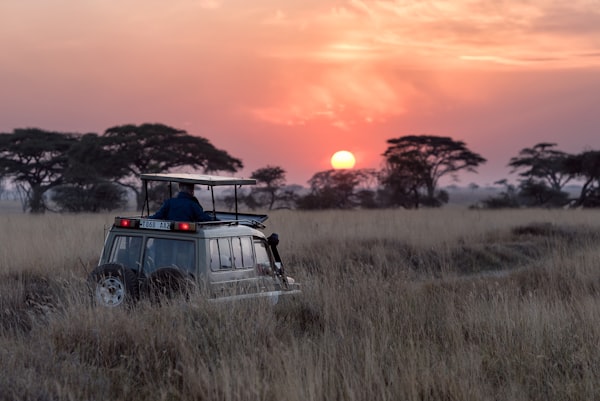
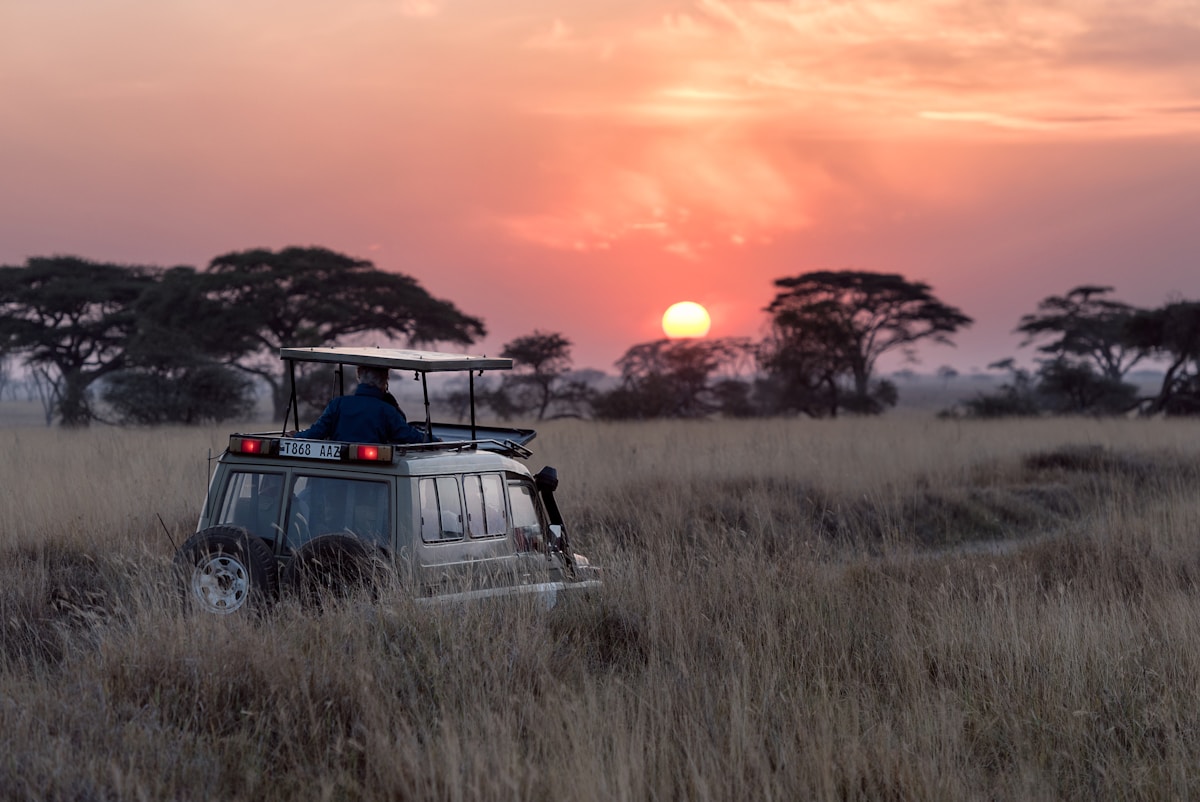
Evening golden hour starts about two hours before sunset. The light turns golden and amber, casting long shadows across the plains. This is the time for silhouette shots, backlit animals, and wide savanna scenes with dramatic skies. Position yourself so the sun is to the side or behind your subject for the most flattering light.
Midday light is harsh and unflattering for most subjects. Use this time for close-ups in shade, detail shots, or rest at the lodge. Do not waste energy fighting bad light — save your batteries and card space for when the light is good.
Composition Rules
Good composition turns a snapshot into a photograph worth keeping. Apply these principles consistently and your images will improve immediately.
Rule of Thirds
Place your subject at one of the intersection points rather than dead centre. For a lion portrait, position the eyes in the upper third. For a walking elephant, place it on the left or right third with space in front for it to walk into. This creates a more dynamic and pleasing image.
Eye Contact
The eyes are everything in wildlife photography. A sharp, well-lit eye creates an emotional connection with the viewer. Always focus on the nearest eye. If the animal is looking at you, centre the composition on the face. If it is looking away, include enough space in the direction of its gaze.
Include the Environment
Not every shot needs to be a tight portrait. Wide shots that show the animal in its landscape tell a bigger story. A single acacia tree on the Serengeti plains, a herd of wildebeest stretching to the horizon, or a leopard silhouetted against a sunset — these environmental images capture the scale and beauty of the African bush.
Use Leading Lines
Rivers, roads, animal paths, and tree lines create natural leading lines that draw the eye into the frame. Use them to guide the viewer towards your subject or to create depth in landscape shots.
Photographing from a Vehicle
Safari photography happens almost entirely from inside a vehicle. This presents unique challenges and opportunities.
For stability, rest your lens on a bean bag draped over the vehicle's window frame or roof opening. Do not use a tripod in the vehicle — it is unstable and wastes time. A bean bag is portable, lightweight, and absorbs vibration. Bring one filled with dried beans or rice; you can empty it for the flight home.
Use the pop-up roof for elevated angles. Standing through the roof hatch gives you a higher perspective that separates your subject from the foreground grass. It also provides more freedom to pan with moving animals. Be careful not to scratch your lens on the roof edges.
Work with your guide. A good guide will position the vehicle for the best light and angle, and will know how to approach animals without disturbing them. Tell your guide what you want to photograph and they will help you get the shot.
Patience Is Everything
The best safari images come to those who wait. Do not fire off hundreds of frames hoping one will work. Watch the animals, anticipate their behaviour, and wait for the moment. The lion that lifts its head and looks directly at you. The elephant that sprays water over its back. The bird that spreads its wings at takeoff. These moments reward patience.
The difference between a good safari photographer and a great one is not equipment — it is the willingness to wait for the right moment. Spend less time shooting and more time watching.
Put the camera down sometimes. The most powerful safari memories are the ones you experience with your own eyes. You cannot photograph everything, and trying to will exhaust you. Be present, enjoy the moment, and trust that the images you do capture will be better for it.
Editing Tips
Post-processing elevates good safari images to great ones. Keep edits natural and subtle — the goal is to enhance what was there, not create something artificial.
- White balance: Warm up morning and evening shots slightly. Correct midday shots to neutral.
- Exposure: Lift shadows to reveal detail in dark fur and feather. Pull back highlights in bright skies.
- Contrast: A slight increase makes images pop, especially in flat midday light.
- Cropping: Crop tightly to remove distracting elements. Follow the rule of thirds with your crop.
- Sharpening: Apply moderate sharpening to bring out fur, feather, and eye detail. Do not over-sharpen.
- Noise reduction: Apply carefully to high-ISO images. Modern AI tools do this well without losing detail.
Phone Photography on Safari
You do not need an expensive camera to get great safari photos. Modern smartphones shoot excellent images and are always in your pocket. Here are phone-specific tips:
- Use the telephoto lens for medium-distance wildlife. It will not match a DSLR, but it produces surprisingly good results for sharing on social media.
- Tap to focus on the animal's eye before shooting. Lock exposure by holding your finger on the screen.
- Shoot in burst mode for action. Select the sharpest frame afterwards.
- Bring a clip-on phone telephoto lens for extra reach. A 12x or 18x clip-on lens makes a noticeable difference.
- Keep your phone charged with a power bank. Cold mornings drain batteries faster than expected.
Essential Photography Gear Checklist
Camera body with fast autofocus, 100–400mm or 200–600mm zoom lens, 70–200mm f/2.8 (if you have it), bean bag for vehicle stability, extra batteries (at least 3), memory cards (64GB minimum), lens cleaning cloth, power bank, and a dust bag for protecting gear in the vehicle.
Safari photography is as much about the experience as the images. The best photographs come from genuine moments of connection with wildlife. Prepare your gear, learn your settings, and then let the bush surprise you. The images will follow.