When the sun sets on a Tanzania safari, most travellers head back to camp for dinner. But the African bush does not stop at dusk — it transforms. A whole world of nocturnal creatures emerges after dark, and a night game drive is your ticket to seeing it.
Night drives use a powerful spotlight to illuminate the bush, revealing animals that are rarely or never seen during the day. It is a different kind of safari experience — quieter, more mysterious, and often more exciting than a daytime game drive.
What Is a Night Game Drive?
A night game drive is a wildlife viewing excursion conducted after dark using a spotlight mounted on a safari vehicle. The spotlight sweeps the bush, reflecting off animal eyes and illuminating creatures that become active only at night. The vehicle moves slowly along tracks while the guide and spotter scan for movement and the distinctive eye-shine of nocturnal animals.
Night drives typically begin just before sunset, around 6:00 PM, and last two to three hours. The guide uses the fading light to spot early evening activity before switching to the spotlight as darkness falls. The experience is completely different from daytime game drives — the sounds, the atmosphere, and the animals are all different.
Where Are Night Drives Allowed?
This is important. Night game drives are not permitted in most of Tanzania's national parks. Tanzania National Parks Authority (TANAPA) regulations prohibit vehicles in parks like the Serengeti, Ngorongoro Crater, and Tarangire after 6:00 PM. These rules exist to protect wildlife and maintain the natural rhythms of the ecosystem.
Night drives are allowed in specific areas:
- Private concessions. The private conservancies bordering the Serengeti, Ngorongoro, and other parks often permit night drives. These areas have different rules than national parks and offer the most reliable night drive experiences.
- Game reserves. Areas like the Maswa Game Reserve and the Grumeti Reserve, which are managed separately from the national parks, allow night drives with proper permits.
- Some southern parks. Nyerere (Selous) and Ruaha permit night drives in certain sections, particularly in the buffer zones and private concessions within or adjacent to the parks.
- Lake Manyara. Night drives are possible in the lakeManyara game-controlled area, though not inside the national park itself.
Always confirm with your safari operator whether night drives are included in your itinerary and where they will take place.
Nocturnal Animals You Might See
The spotlight reveals a cast of characters that most safari visitors never encounter. Here are the nocturnal animals most commonly seen on night drives in Tanzania.
Aardvark
One of Africa's most elusive creatures, the aardvark is almost exclusively nocturnal. It uses its powerful claws to dig into termite mounds and its long, sticky tongue to extract insects. Seeing an aardvark on a night drive is a rare and special sighting — they are shy, fast-moving, and difficult to spot even with a spotlight.
Leopard
Leopards are most active at dawn and dusk, but they hunt throughout the night. A night drive significantly increases your chances of seeing a leopard on the move. The spotlight catches their reflective eyes from surprising distances, and watching a leopard stalk through the darkness is one of safari's most thrilling experiences.
Spotted Hyena
Hyenas are often called nocturnal, though they can be active at any time. At night, hyena clans are on the move, hunting, patrolling territory, and interacting socially. Their distinctive whooping calls carry across the bush and are part of the night drive soundtrack.
Porcupine
African porcupines are large, impressive rodents that emerge at night to forage. Their quills rattle when they feel threatened, creating a sound you will not forget. They are relatively common on night drives and are fascinating to watch as they waddle along paths searching for roots and tubers.
Bushbaby (Galago)
These tiny, wide-eyed primates are among the most endearing nocturnal creatures. Bushbabies leap through the trees with extraordinary agility, their large eyes reflecting the spotlight like glowing orbs. They are quick and difficult to photograph, but seeing one is always a delight.
African Wild Cat
The ancestor of the domestic cat, the African wild cat is a skilled nocturnal hunter. It looks remarkably like a tabby house cat but behaves very differently — solitary, wary, and perfectly adapted to hunting rodents and birds in the darkness.
Civet and Genet
Both civets and genets are small, cat-like carnivores that are almost entirely nocturnal. They are agile climbers and skilled hunters, and the spotlight often catches them moving through trees or along the ground. The large-spotted genet is particularly photogenic with its striking coat pattern.
Spotlight Technique
The spotter on a night drive uses a focused beam to scan the bush in a systematic pattern. When eye-shine appears, the vehicle stops and the light holds on the animal while the guide identifies it. The best spotters can detect eye-shine from hundreds of metres away — it is a skill that takes years to develop.
What to Expect on a Night Drive
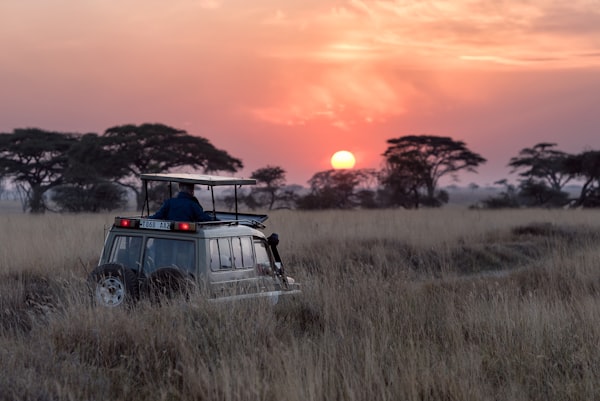
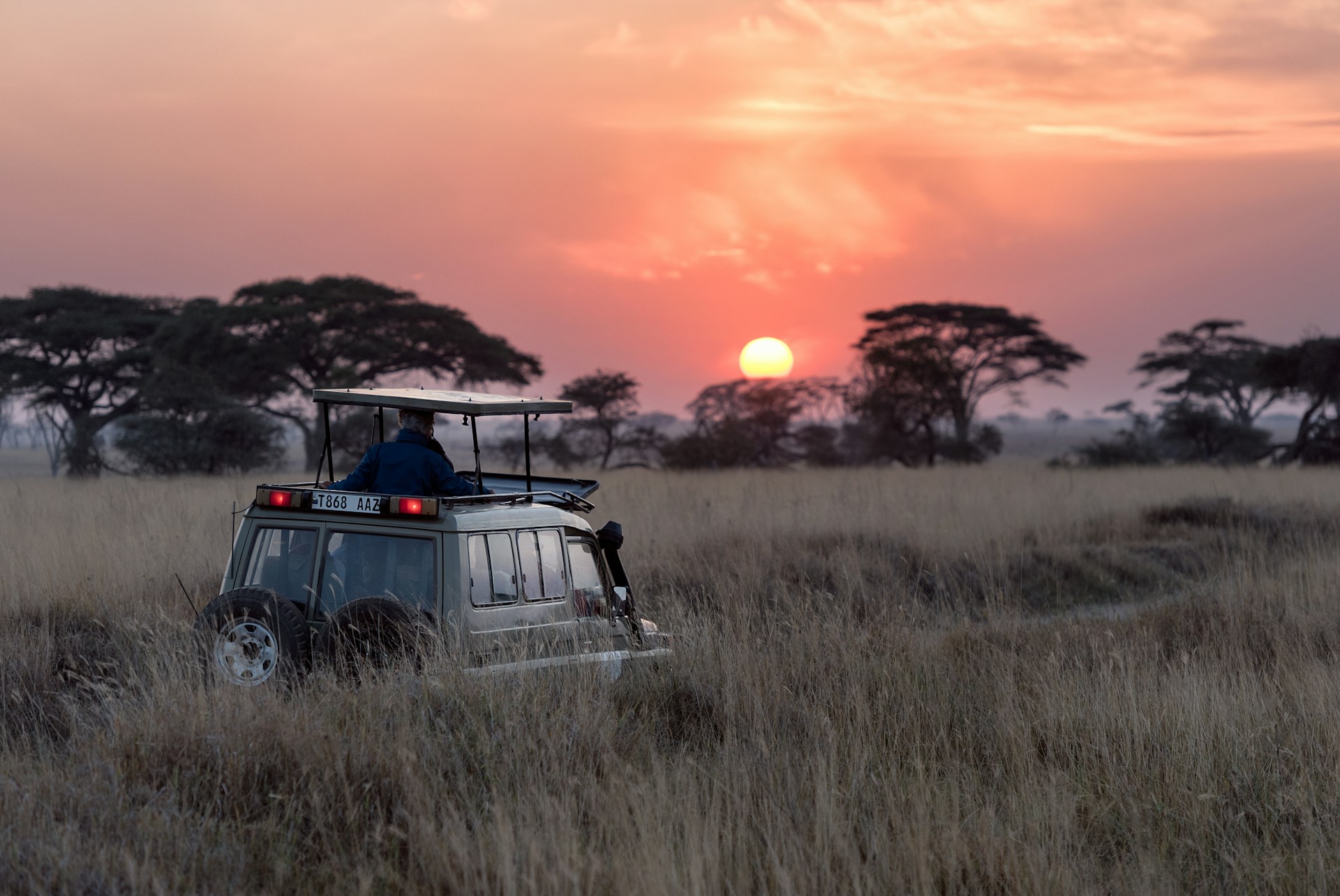
The drive begins as the sun sets. You may start with a sundowner stop, watching the sky turn orange and pink over the savannah. As darkness falls, the spotlight clicks on and the bush transforms.
The first thing you notice is the sounds. The African night is alive with calls — the whoop of hyenas, the chirp of crickets, the distant roar of a lion, the hoot of an owl. These sounds create an atmosphere that daytime safaris cannot match.
The vehicle moves slowly, rarely above walking pace. The guide and spotter work together, one driving and one scanning. When something is spotted, the vehicle stops and the light holds. The guide explains what you are seeing, how the animal behaves at night, and any interesting facts about its ecology.
Not every night drive produces spectacular sightings. Some nights you might see hyenas, porcupines, and owls — common but still enjoyable. Other nights you might encounter a leopard hunting or aardvark emerging from its burrow. The unpredictability is part of the appeal.
Tips for Night Drives
- Bring a warm layer. Temperatures drop quickly after dark, even in the tropics. A fleece or light jacket is essential.
- Use red light on your camera. White light from phone screens or cameras can disturb animals. Red light is less intrusive and preserves your night vision.
- Be patient. Night drives are slower and quieter than daytime drives. The best sightings often come after an hour of patient scanning.
- Listen to the sounds. The sounds of the African night are as important as the sights. Close your eyes occasionally and let the bush come to you.
- Ask your guide about the animals. Nocturnal creatures have fascinating adaptations. Your guide can explain how aardvarks find termites, how leopards see in the dark, and why hyenas whoop.
The African bush after dark is a different world. The spotlight cuts through the darkness, revealing creatures that have evolved to own the night. Every night drive is an adventure into the unknown.
Night game drives add a dimension to your Tanzania safari that daytime activities cannot provide. They reveal the hidden half of African wildlife and create memories that are uniquely thrilling. If your itinerary includes areas where night drives are permitted, do not miss the opportunity.