
Climbing Kilimanjaro means passing through five distinct climate zones in a single trek. You start in a warm, humid rainforest and end in Arctic conditions at the summit. The temperature swing from base to top can be up to 55°C. Understanding the weather at each altitude is critical for packing the right gear and knowing what to expect.
I have guided climbs in every month of the year. I have seen clear summit mornings in July and snowstorms in September. The mountain creates its own weather, and conditions change fast. Here is what you need to know.
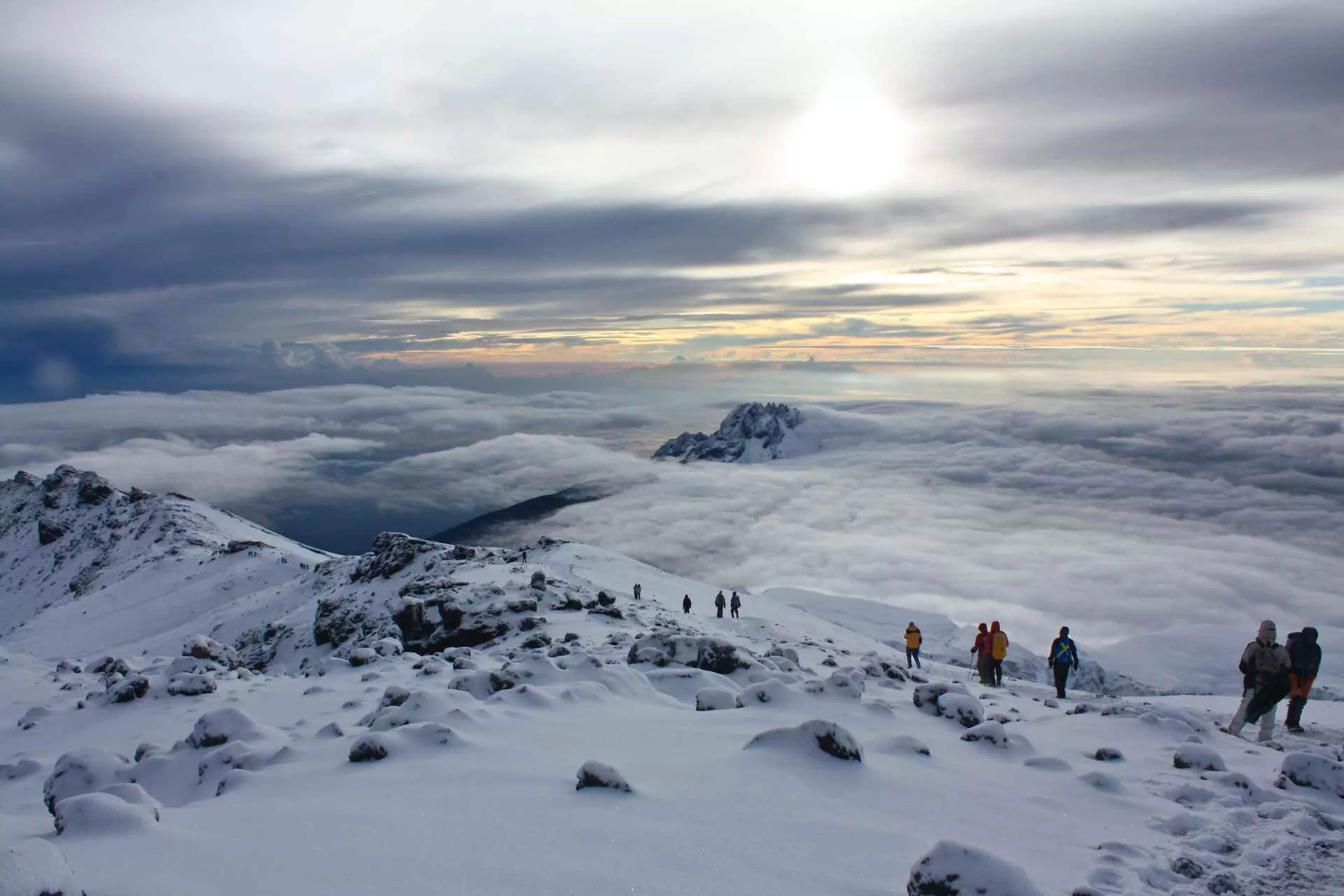
The Five Climate Zones of Kilimanjaro
Kilimanjaro contains five ecological zones stacked on top of each other. Each has its own weather, vegetation, and temperature range. Most climbers pass through all five in a single ascent.
Rainforest
Warm, humid, and often wet. This zone wraps around the mountain's base and receives the most rainfall. Dense vegetation, colourful birds, and colobus monkeys greet you on day one. Expect afternoon showers and mist. Waterproof layers are essential even if the morning starts clear.
Heath and Moorland
The landscape opens up above the forest canopy. The air becomes drier and windier. Giant heather, lobelias, and groundsels dominate. Rain is less frequent but afternoon clouds still build. Most trekkers start feeling the altitude shift here, and cooler temperatures demand warmer layers.
Alpine Desert
Stark, barren, and beautiful. Very little rainfall — less than 250mm per year. The extreme temperature swings between day and night are the real challenge. The sun is intense at this altitude, but once it sets, the cold arrives fast. Wind chill makes it feel even colder. Layered clothing is non-negotiable.
Arctic Summit
An Arctic environment. No vegetation, no shelter, very little oxygen. Most summit attempts begin at midnight, meaning you face the coldest temperatures during the most physically demanding push. Wind chill can push feels-like below -30°C. Full thermal gear is essential.
Glacial Ice Cap
Remnants of Kilimanjaro's famous glaciers. The ice reflects sunlight, creating blinding conditions on clear mornings. Sunglasses with UV protection and sunscreen are critical. The glacial ice is retreating — what you see today may not be there in 20 years.
Temperature by Altitude: Quick Reference
| Zone | Altitude | Day Temp | Night Temp | Conditions |
|---|---|---|---|---|
| Rainforest | 1,800–2,800m | 20–30°C | 15–18°C | Warm, humid, rainy |
| Moorland | 2,800–4,000m | 10–20°C | -2 to 5°C | Cool, windy, misty |
| Alpine Desert | 4,000–5,000m | 5–10°C | -10 to -5°C | Dry, cold, windy |
| Summit Zone | 5,000–5,895m | -5 to 0°C | -25 to -15°C | Arctic, extreme wind chill |
The key takeaway: the temperature drops dramatically as you ascend. What starts as a tropical walk ends in sub-zero conditions. Pack for the coldest you will face, not the warmest.
Monthly Weather Patterns
Kilimanjaro has two rainy seasons and two dry seasons each year. Understanding these patterns helps you choose the right month.
January – March
Shorter but heavier rain showers, usually in the afternoon. Warm temperatures. The mountain is lush and green. Good for fewer crowds — you just need to handle occasional rain. Southern routes get more rain during this period.
April – May (Long Rains)
The heaviest rainfall of the year. Trails become muddy, visibility is poor. Most operators reduce departures. We do not recommend April or May for first-time climbers. Experienced trekkers only.
June – October (Dry Season)
The prime climbing window. Rain is minimal, skies are clearer, temperatures are stable. July and August are busiest. September and October offer dry weather with fewer crowds. Night temperatures are colder at altitude — cold-weather gear is critical.
November – December (Short Rains)
Afternoon showers but less intense than the long rains. The mountain is green and beautiful. Crowds thin out after October. Clear mornings are common. Excellent for experienced climbers who want a quieter experience.
The driest and most stable weather is June to October. For clear summit views and minimal rain, aim for July, August, or September. For fewer crowds with still-decent weather, try October or February.
What to Wear at Each Altitude
Packing for Kilimanjaro is all about layering. The temperature drops dramatically as you ascend, and conditions can change within hours.
Rainforest (1,800–2,800m)
Lightweight moisture-wicking shirt, trekking pants, rain jacket, broken-in hiking boots. A light fleece for evening.
Moorland (2,800–4,000m)
Add a warmer fleece or softshell jacket. Warmer trekking socks. A beanie or buff for cool mornings.
Alpine Desert (4,000–5,000m)
Insulated jacket (down or synthetic), thermal base layers, warm hat, insulated gloves. Fleece-lined trekking pants.
Summit Zone (5,000–5,895m)
Full thermal base layers, insulated down jacket, balaclava, summit mitts, insulated boots, gaiters. Four-season sleeping bag rated to -20°C.
Rain and Wind Patterns
Rain on Kilimanjaro follows a predictable pattern. Mornings are typically clear, with clouds building through late morning and afternoon. Showers hit in the late afternoon, clearing by evening. The rainforest zone sees the most rain. The alpine desert receives very little. Start hiking early each day to avoid the worst of afternoon showers.
Snow is possible at higher altitudes during the dry season, particularly above 4,500m. The summit zone can receive snowfall year-round, though it is more common from June to September.
Wind is a major factor above 4,000m. Wind speeds can reach 30 to 50 km/h, creating dangerous wind chill. The summit attempt is timed for pre-dawn hours when winds are calmest, but conditions can change rapidly. A windproof outer shell is essential above the alpine desert.
The most common mistake first-time climbers make is underestimating how cold it gets at the summit. Even during the warmest months, Uhuru Peak at dawn can feel like -20°C with wind chill. Pack for the worst, and you will enjoy the experience far more.
Frequently Asked Questions
Ready to Experience Kilimanjaro's Weather?
Tell us your preferred dates and we will advise on the best month for your climb, what to pack, and how to prepare for every climate zone on the mountain.


