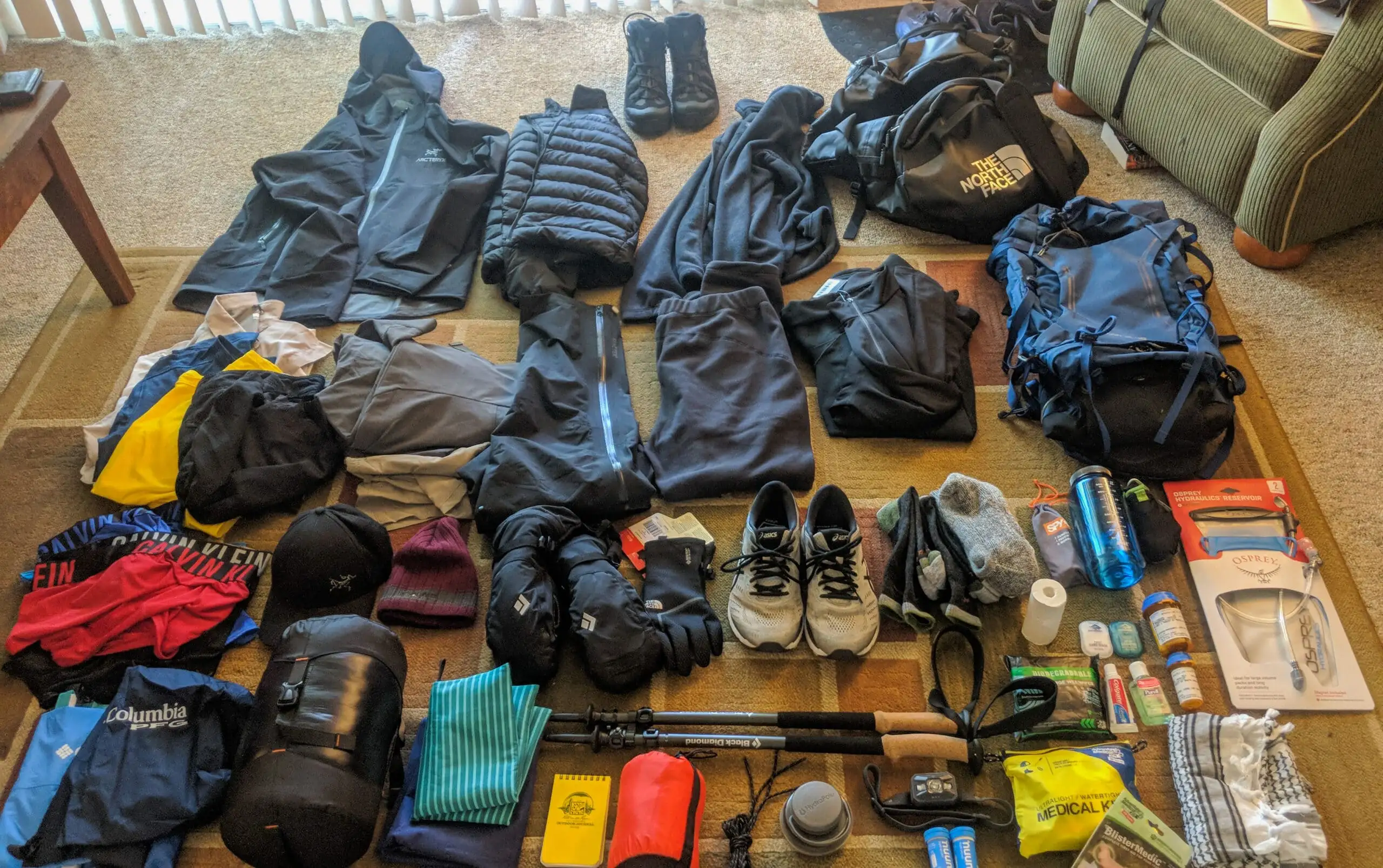
Packing for Kilimanjaro is a balancing act. You need enough gear to handle temperatures ranging from 30°C at the base to -15°C at the summit, rain, wind, dust, and intense equatorial sun — all while keeping your backpack light enough for porters to carry.
Golden Rule of Packing
Pack light, pack smart. Porters carry your main bag (max 15 kg), but you carry your daypack all day. Aim for under 7 kg in your daypack.
The Layering System
Kilimanjaro's weather changes dramatically as you ascend through five distinct climate zones. The layering system is how you stay comfortable across all zones.
Base Layer
Moisture-wicking thermals. Merino wool or synthetic. Avoid cotton. Pack 2 sets to rotate.
Mid Layer
Insulating fleece or 600-fill down jacket. Keeps you warm at altitude. Compresses small.
Outer Layer
Waterproof shell jacket + pants. Gore-Tex, fully taped seams, pit zips for ventilation.
Clothing Checklist
- Moisture-wicking base layer tops (2–3)
- Moisture-wicking base layer bottoms (2)
- Insulating fleece or softshell jacket (1)
- Down or synthetic insulated jacket (1)
- Waterproof shell jacket with hood (1)
- Waterproof shell pants (1)
- Hiking pants — lightweight, quick-dry (2–3 pairs)
- Shorts for lower elevations (1–2)
- Fleece or thermal leggings for sleeping and summit (1–2)
- Warm hat / beanie (1)
- Sun hat with brim (1)
- Balaclava or buff for summit night (1)
- Liner gloves (1 pair)
- Insulated gloves or mittens (1 pair)
- Hiking socks — wool or synthetic (4–5 pairs)
- Sleeping socks — warm and dry (1 pair)
- Underwear — moisture-wicking (5–6)
- Gaiters for mud and scree (1 pair)
Footwear: Your Foundation
Your boots are the single most important piece of gear. Blisters or foot pain can end your climb before you reach the summit.
- Waterproof hiking boots — ankle support essential, broken in
- Camp shoes or sandals for evenings at camp
- Toe liners or blister prevention tape (Compeed)
- Extra laces
Test your boots on at least five long hikes before the climb. They should feel comfortable with the socks you plan to wear. Waterproofing is non-negotiable.
Sleeping Gear
You will spend 6–8 nights in tents. Temperatures at higher camps can drop well below freezing.
- Sleeping bag rated to -15°C (5°F) or colder
- Sleeping bag liner — silk or thermal (adds warmth, keeps bag clean)
- Inflatable sleeping pad — high R-value for insulation from cold ground
Can You Rent Sleeping Gear in Moshi?
Yes. High-quality sleeping bags rated to -15°C and sleeping pads are available for rent through your operator. This saves valuable luggage space. At Bush Lion Tours, we provide well-maintained rental gear tested on the mountain. Renting costs approximately $30–50 for the entire climb.
Equipment and Accessories
These items make the difference between a comfortable climb and a miserable one.
- Daypack (30–35 litres) — for water, snacks, layers, and camera
- Trekking poles — adjustable, with rubber tips and baskets
- Headlamp with extra batteries — essential for summit night
- Water bottles or hydration bladder — at least 3 litres capacity
- Water purification tablets or SteriPen
- Sunglasses with UV protection — category 3 or 4 lenses
- Small dry bags or zip-lock bags — keep electronics dry
- Camera with spare batteries — cold drains batteries quickly
- Power bank — 10,000mAh or larger
Health and Personal Items
- Sunscreen SPF 50+ — equatorial sun is intense at altitude
- Lip balm with SPF 30+
- Moisturiser — the air is extremely dry at altitude
- Personal medications — bring enough for the full trip plus extras
- Blister kit — Compeed, moleskin, athletic tape
- Ibuprofen or paracetamol — for headaches and altitude symptoms
- Anti-diarrheal medication (Imodium)
- Oral rehydration salts + electrolyte tablets
- Small personal first aid kit
- Wet wipes — no showers on the mountain
- Toilet paper and zip-lock bag for waste
- Insect repellent — for lower elevations
Documents and Money
- Passport with at least 6 months validity
- Tanzanian visa — e-visa or on arrival ($50, $100 for US citizens)
- Printed flight itinerary
- Travel insurance — must cover high-altitude trekking and evacuation
- Cash in USD — small bills for tips (post-2009 notes only)
- Credit or debit card — for Moshi purchases and emergencies
- Emergency contact list
What to Rent in Moshi
Renting gear in Moshi is a smart strategy. It reduces luggage weight and saves money on equipment you may only use once.
Bring from home: Boots, clothing layers, daypack, headlamp, sunglasses, and personal health items. These are personal items where fit and quality matter.
What NOT to Bring
- Cotton clothing: Retains moisture, dries slowly, loses insulation when wet
- Jeans: Heavy, restrictive, slow to dry
- Excessive toiletries: No showers for 6–8 days. Bring basics only
- Laptop: Adds weight, no real use on the mountain
- Large toiletry bag: Use small zip-lock bags instead
- Heavy books: Use a Kindle or phone
- Multiple pairs of shoes: Boots + camp shoes is sufficient
Packing Tips from Our Guides
- Test everything before you arrive. Headlamp batteries fresh, sleeping bag tested, boots broken in. The worst time to discover gear failure is at 4,500m.
- Keep your daypack organised. Use zip-lock bags and dry bags. When you need sunscreen at 4,000m with cold hands, you don't want to dig through a messy pack.
- Pack lighter than you think. Porters carry your main bag, but you carry your daypack. Aim for under 7 kg in your daypack.
- Bring a buff or balaclava. Sun shield, dust mask, warmth layer, eye mask, hand towel — one item, five uses.
- Protect electronics from cold. Keep phone and camera batteries inside your jacket against body heat. Carry a power bank as backup.
Need Gear Advice?
Our team has helped thousands of climbers prepare. Every booking includes a detailed pre-trip gear guide.