
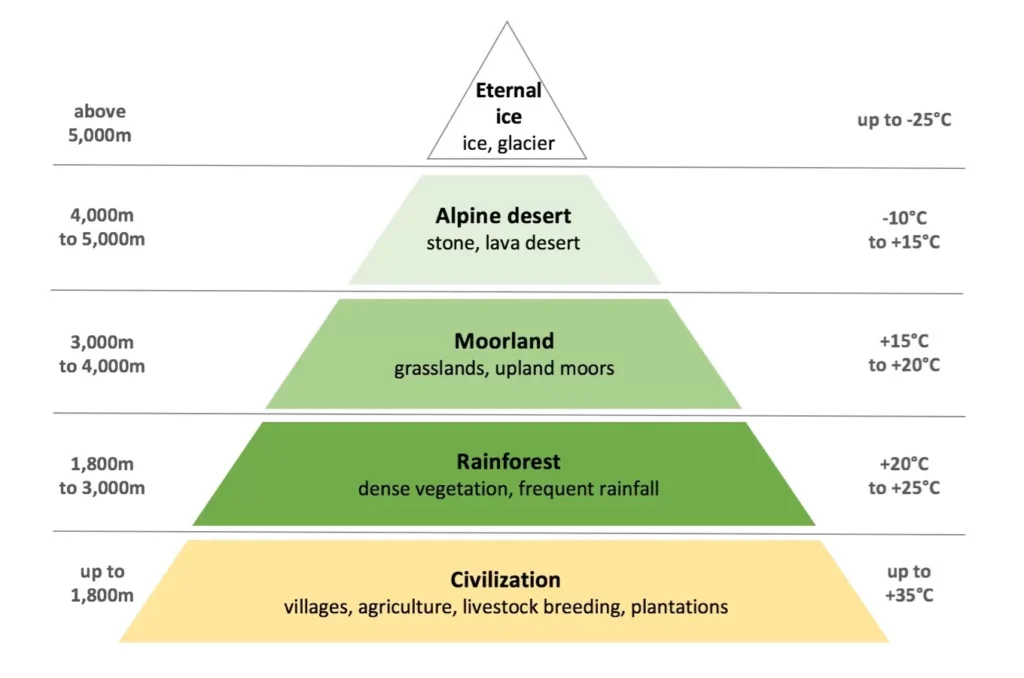
Kilimanjaro may be located near the equator, but the weather on the mountain changes dramatically as you climb higher. Within a single trek, climbers pass through five different climate zones — from warm tropical rainforest to the icy arctic conditions near the summit.
Understanding the month-by-month weather patterns on Mount Kilimanjaro helps climbers choose the best time to climb, pack the right clothing and gear, and prepare mentally for the adventure ahead.
Kilimanjaro has two main dry seasons and two rainy seasons each year. Although the mountain is open all year round, some months provide clearer skies, better views, and higher summit success rates than others.
Below is a complete month-by-month Kilimanjaro weather guide to help you decide the best time for your climb.
These months are part of the short dry season, which means the weather is usually clear and stable.
Civilization Zone (up to 1,800m)
The weather is warm and sunny. Temperatures can reach 30–35°C in villages around the mountain.
Rainforest Zone (1,800m – 3,000m)
The forest is green and beautiful. Rain is possible, but usually short. Temperatures are about 20–25°C.
Moorland Zone (3,000m – 4,000m)
Days are comfortable with temperatures around 15–20°C, but nights become cooler.
Alpine Desert (4,000m – 5,000m)
The air becomes dry and cold. Day temperatures can reach 10–15°C, but nights drop below 0°C.
Arctic / Ice Zone (above 5,000m)
Near the summit it becomes very cold. Temperatures can fall to -10°C or lower during summit night.
These months are excellent for climbing because the weather is clear and views are amazing.
This period is the long rainy season, especially in April.
Civilization Zone
Warm and humid with frequent rain showers.
Rainforest Zone
This zone becomes very wet and muddy, with thick clouds and frequent rain.
Moorland Zone
Fog and light rain are common. Visibility can be limited.
Alpine Desert
Less rain than lower zones, but it can be windy and cold.
Arctic Zone
Temperatures stay very cold, often below -5°C.
During these months the mountain is quiet with fewer climbers, but trails can be slippery.
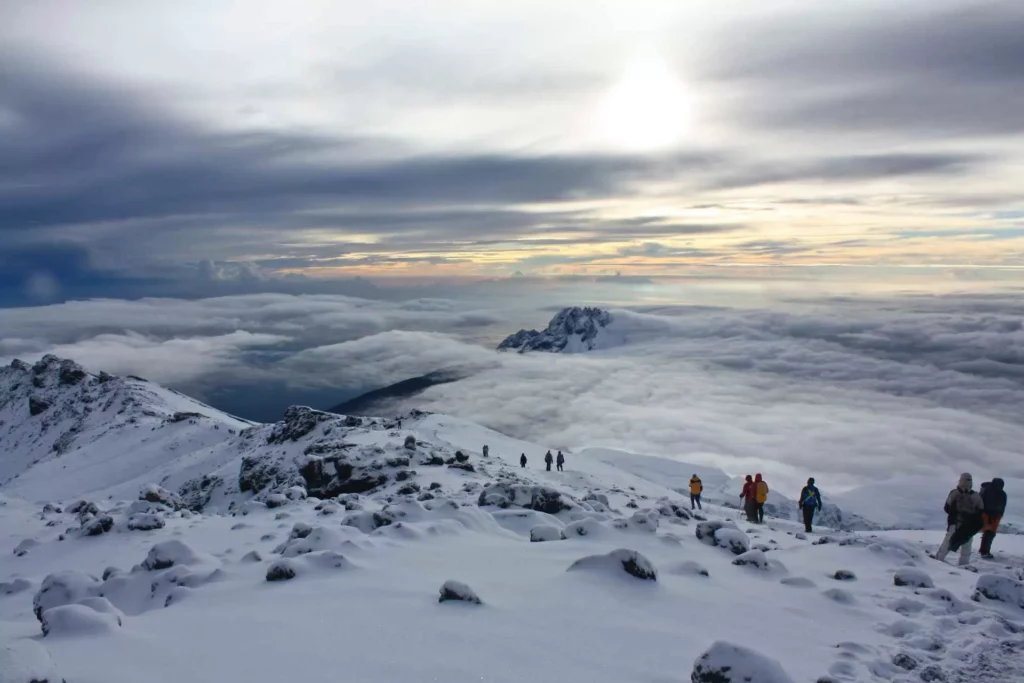
This is the long dry season and one of the best times to climb.
Civilization Zone
Warm but comfortable weather.
Rainforest Zone
Less rain than earlier months, and the forest is still green from previous rains.
Moorland Zone
Cool and clear conditions. Many climbers enjoy beautiful landscapes here.
Alpine Desert
Dry air and clear skies, but nights are very cold.
Arctic Zone
Summit temperatures may reach -10°C to -20°C, especially in July and August.
These months are popular because weather is stable and summit success rates are higher.
This is the short rainy season, but conditions are usually lighter than April.
Civilization Zone
Warm temperatures around 25–30°C.
Rainforest Zone
Short rain showers are common.
Moorland Zone
Clouds may appear, but many days are still clear.
Alpine Desert
Cold and dry conditions remain similar to other months.
Arctic Zone
Temperatures stay below freezing, especially during summit night.
Late December becomes busy because many climbers try to reach the summit during Christmas and New Year.
100% local tour company based in Tanzania. We offer Kilimanjaro climbs, wildlife safaris, Zanzibar trips, and cultural tours. Travel with experts. Support local.


© 2025 Bush Lion Tours. All Rights Reserved. | Website by Bush Lion Team 🇹🇿