
Food And Drinks on Kilimanjaro play a very important role in helping climbers stay strong, healthy, and motivated during the trek. Climbing Mount Kilimanjaro requires long hours of hiking every day, often in cold temperatures and at high altitude where oxygen levels are lower. Because of this, your body burns a large amount of energy and needs regular meals and proper hydration to perform well.
During the climb, climbers can burn 3,000 to 5,000 calories per day. Without proper nutrition and enough water, fatigue can increase and altitude adjustment becomes more difficult. That is why professional trekking companies like Bush Lion Tours provide carefully planned meals and warm drinks throughout the journey.
Food on Kilimanjaro is designed to be nutritious, warm, and easy to digest, helping climbers maintain energy while also supporting acclimatization to the altitude.
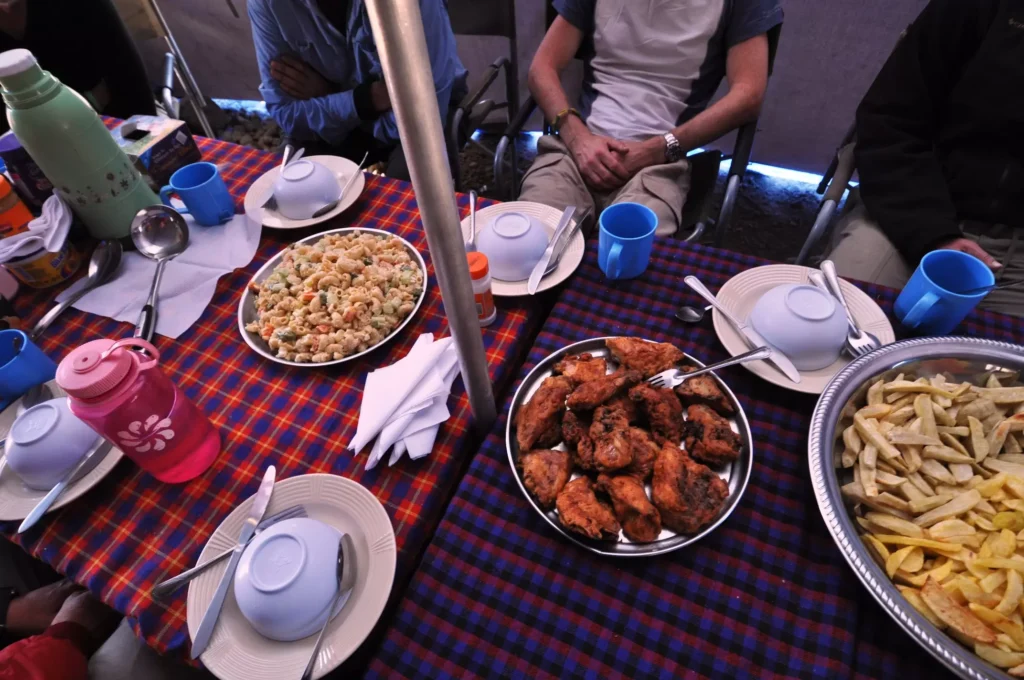
Food And Drinks on Mt. Kilimanjaro are prepared fresh by experienced mountain cooks who travel with the climbing team. Meals are usually served in a dining tent where climbers can sit comfortably after hiking. On the Marangu Route, meals are typically served inside the hut dining areas.
Climbers normally receive three main meals each day, along with afternoon tea and snacks. The menu includes a combination of carbohydrates, proteins, fruits, vegetables, and warm beverages to keep the body energized.
The meals are simple but satisfying, often including soups, rice or pasta dishes, meat or vegetarian options, and fresh fruits. Warm drinks like tea, coffee, and hot chocolate are available daily, especially in the cold evenings at higher camps.
Breakfast is served early in the morning before the trekking day begins. It is designed to give climbers enough energy to hike for several hours before the next meal.
A typical Kilimanjaro breakfast includes warm porridge, bread or pancakes, eggs, and fresh fruit such as bananas or oranges. Tea, coffee, and hot chocolate are also provided to help warm the body during cold mountain mornings.
This type of breakfast provides the carbohydrates and proteins needed for sustained energy while hiking through Kilimanjaro’s different ecological zones.
Lunch depends on the length of the hiking day. On shorter days, climbers may return to camp and enjoy a freshly prepared hot lunch. On longer trekking days, the cook prepares a packed lunch box that climbers carry in their daypack.
Lunch is designed to be light but energizing. It often includes sandwiches or chapati with eggs or chicken, along with fresh fruit and juice. When lunch is served at camp, it may also include warm soup, rice or pasta, and cooked vegetables. This meal helps restore energy so climbers can continue hiking comfortably.
Dinner is the most important meal of the day. After many hours of walking, the body needs a warm and satisfying meal to recover. Dinner is usually served in the early evening once climbers arrive at camp.
The meal normally begins with a hot soup such as vegetable, pumpkin, or tomato soup. This helps warm the body and improve hydration. After the soup, climbers are served a main dish that may include rice, pasta, or potatoes with meat, chicken, lentils, or vegetables. Fresh fruit is often served as dessert. Warm drinks like tea or hot chocolate are also available to help climbers stay warm during the cold mountain evenings.
When climbers reach camp in the afternoon, they are usually welcomed with tea and light snacks. This small break is important because it helps climbers relax and regain energy after the day’s hike. Snacks are simple and enjoyable, often including biscuits, popcorn, or peanuts served with hot drinks. It is a comfortable moment where climbers can rest, talk with their team, and enjoy the mountain atmosphere.
The final climb to the summit usually begins around midnight. Before leaving camp, climbers wake up and are given a small but important midnight snack. This snack provides quick energy and helps warm the body before the challenging summit climb.
Climbers are normally served hot chocolate, tea or coffee, along with biscuits. Sometimes warm soup or orange squash is also provided. Because temperatures are very cold at night on Kilimanjaro, these warm drinks are very helpful. They prepare climbers for the slow and steady hike toward the summit in the dark.
Proper hydration is a key part of Food And Drinks on Mt. Kilimanjaro. At high altitude the body loses water faster, which can increase the risk of dehydration and altitude sickness.
Climbers are encouraged to drink at least three to four liters of water each day. The mountain team provides clean drinking water that is boiled and filtered to ensure it is safe. Warm drinks such as tea and soup also help maintain hydration during the climb.
Climbers with special dietary needs can also enjoy suitable Food And Drinks on Mt. Kilimanjaro. Most trekking companies can prepare meals for vegetarian, vegan, or gluten-free diets, as well as for people with specific food allergies.
Climbers simply need to inform the company before the climb so that the mountain cook can prepare the appropriate ingredients.
Many climbers are pleasantly surprised by the quality and variety of Food And Drinks on Mt. Kilimanjaro. Even at high altitude, the meals are warm, nutritious, and satisfying. Good food not only improves comfort but also plays a key role in helping climbers reach the summit successfully.
With proper meals, warm drinks, and enough water throughout the trek, climbers can stay energized and enjoy the incredible experience of climbing Mount Kilimanjaro all the way to Uhuru Peak.
Many climbers wonder what a typical menu looks like during a Kilimanjaro trek. While meals may vary slightly depending on the route and conditions, the food is always designed to provide enough energy, warmth, and nutrition for the climb.
Below is an example of a simple menu during a 7-day trek on Mount Kilimanjaro.
| Altitude | Zone | Appetite Level | Recommended Foods |
|---|---|---|---|
| 1,800 – 2,800 m | Rainforest Zone | Normal appetite | Full meals such as rice, chicken, vegetables, eggs, fruit |
| 2,800 – 3,800 m | Heath & Moorland | Slightly reduced appetite | Warm meals, soups, pasta, potatoes, fruits |
| 3,800 – 4,700 m | Alpine Desert | Lower appetite | Light meals, soup, porridge, fruits, tea |
| 4,700 – 5,200 m | High Camp | Often low appetite | Hot soup, small portions, tea, biscuits |
| 5,200 – 5,895 m | Summit Zone | Very low appetite | Hot chocolate, tea, energy snacks, biscuits |
| Altitude | Recommended Water Intake | Why It Is Important |
|---|---|---|
| 1,800 – 3,000 m | 2 – 3 Liters per day | Helps the body adjust to the start of the trek |
| 3,000 – 4,000 m | 3 Liters per day | Supports acclimatization and prevents dehydration |
| 4,000 – 5,000 m | 3 – 4 Liters per day | High altitude increases water loss through breathing |
| Above 5,000 m | 4 Liters per day | Helps reduce risk of altitude sickness |
Even though the mountain team provides plenty of meals, many climbers like to carry personal snacks for extra energy during the hike. Snacks can be helpful between meals, especially on long trekking days or during the summit climb.
Some good snack options include energy bars, chocolate, nuts, dried fruit, and biscuits. These foods are lightweight, easy to carry, and provide quick energy when needed.
Many climbers also bring electrolyte drink powder that can be mixed with water. This helps replace minerals lost through sweating and supports hydration at high altitude.
Carrying a few favorite snacks can also improve morale during challenging sections of the climb.
Food safety is a very important part of Food And Drinks on Mt. Kilimanjaro. Experienced mountain crews follow strict hygiene practices to ensure that meals are safe and clean for climbers.
Mountain cooks prepare meals using fresh ingredients that are transported to each camp by porters. Cooking equipment is cleaned regularly, and food is prepared in a dedicated kitchen tent away from dust and dirt.
Drinking water is always treated before being served. It is usually boiled and filtered to remove bacteria and make it safe for consumption. Climbers are also encouraged to wash their hands before eating, and many teams provide warm water for handwashing at camp.
These hygiene practices help prevent stomach problems and allow climbers to focus on enjoying their Kilimanjaro adventure.
100% local tour company based in Tanzania. We offer Kilimanjaro climbs, wildlife safaris, Zanzibar trips, and cultural tours. Travel with experts. Support local.


© 2025 Bush Lion Tours. All Rights Reserved. | Website by Bush Lion Team 🇹🇿