
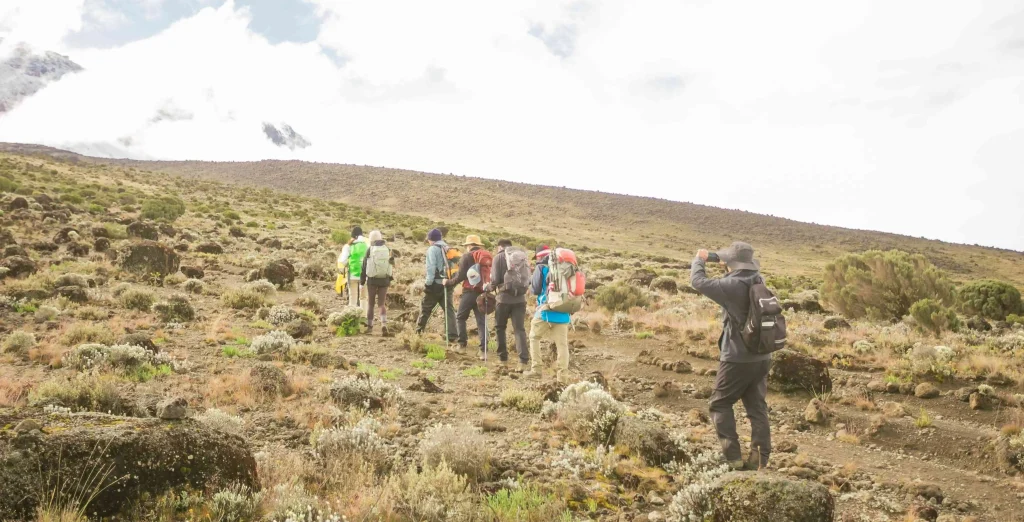
The 8 Days Northern Circuit Route is the most scenic and successful route to climb Mount Kilimanjaro, Africa’s tallest mountain. This trail circles around the northern slopes of Kilimanjaro, giving climbers more time to acclimatize and enjoy spectacular views from every side. It is known for its peaceful paths, beautiful landscapes, and high summit success rate.
This route is perfect for travelers who want a less crowded, safer, and more enjoyable experience to reach Uhuru Peak (5,895 meters) — the Roof of Africa. The extra days make it one of the easiest climbs in terms of altitude adjustment, even though it’s one of the longest routes.
The Northern Circuit Route allows you to climb slowly and safely. The pace is steady, giving your body more time to adjust to the high altitude. Each camp offers breathtaking views and peaceful surroundings, far from the busy southern routes.
Guides use a pulse oximeter to monitor your oxygen levels daily and ensure you are climbing safely. Hot meals are prepared by the chef at every camp, and comfortable sleeping tents are set up by the support team. The care and dedication of Bush Lion Tours’ crew make the experience smooth and enjoyable from start to finish.
When you finally reach Uhuru Peak, you will stand above the clouds with a deep sense of achievement — a feeling that stays with you forever.
The climb starts at Londorossi Gate and continues through Mti Mkubwa, Shira Plateau, Lava Tower, Moir Hut, Buffalo Camp, and School Hut before the final summit push. Each day, you will hike between 5 to 8 hours, gradually ascending through different ecological zones. The final night is the summit attempt to Uhuru Peak, followed by a descent through Mweka Gate, where you’ll celebrate your incredible success.
The Northern Circuit Route is famous for being the longest route on Kilimanjaro, but also the safest and most scenic. Because of its extended itinerary, it offers the best chance to reach the summit successfully. The route also provides stunning panoramic views across the Kenyan plains, the Kibo and Mawenzi peaks, and the untouched wilderness of the northern slopes.
It is ideal for climbers who prefer a quieter path, excellent acclimatization, and a real connection with nature. Whether you are a first-time trekker or an experienced hiker, this route gives you the best possible balance between challenge, beauty, and comfort.
You will be welcomed by our team at Kilimanjaro International Airport and transferred to your hotel in Moshi town. Take this day to relax, recover from your journey, and meet your mountain guide for a pre-climb briefing and gear check.
Accommodation: Maridad Hotel / Parkview Inn
Meals: Dinner included
After breakfast, drive to Londorossi Gate for registration. You’ll start your trek through the lush rainforest filled with birds, monkeys, and exotic plants. The trail is calm and beautiful, giving you time to enjoy nature before reaching Mti Mkubwa Camp.
Elevation: 2,100m to 2,650m
Hiking Time: 3–4 hours
Accommodation: Mti Mkubwa Camp
You’ll leave the forest and enter the moorland zone. The trail opens up with great views of Shira Ridge and the surrounding hills. You’ll walk slowly to help your body adjust to the altitude and reach Shira 1 Camp in the afternoon.
Elevation: 2,650m to 3,500m
Hiking Time: 5–6 hours
Accommodation: Shira 1 Camp
Today’s trek is short but very scenic. You’ll cross the Shira Plateau, one of Kilimanjaro’s most famous features. As you walk, you’ll see Mount Meru in the distance and enjoy wide open landscapes. This day helps with acclimatization.
Elevation: 3,500m to 3,850m
Hiking Time: 4–5 hours
Accommodation: Shira 2 Camp
You’ll climb gradually toward Lava Tower (4,600m), where you’ll stop for lunch. This is an important day for acclimatization. Afterward, descend to Moir Hut for the night. The descent helps your body adapt to higher altitude.
Elevation: 3,850m to 4,200m (up to 4,600m at Lava Tower)
Hiking Time: 6–7 hours
Accommodation: Moir Hut
This is one of the most beautiful days of the trek. You’ll walk along the northern slopes with amazing views of Kenya’s plains. The trail is quiet, and you may see wildlife like eland and buffalo along the way.
Elevation: 4,200m to 4,020m
Hiking Time: 6–8 hours
Accommodation: Buffalo Camp
After breakfast, continue trekking across alpine desert terrain with beautiful views of Mawenzi Peak. You’ll reach School Hut by afternoon and prepare for your summit attempt. Rest early and stay warm—it’s a big day ahead.
Elevation: 4,020m to 4,800m
Hiking Time: 5–6 hours
Accommodation: School Hut
You’ll wake up at midnight to start your climb to the summit under the stars. It’s a tough but unforgettable journey. As dawn breaks, you’ll reach Uhuru Peak—the highest point in Africa. Celebrate your success with sunrise views over the glaciers before descending to Mweka Camp.
Elevation: 4,800m to 5,895m (summit), then descend to 3,100m
Hiking Time: 10–12 hours
Accommodation: Mweka Camp
A gentle trek takes us down through the rainforest to Mweka Gate, where we complete park formalities and receive certificates, which you can hang up with pride! We are then met by our vehicles and return to the hotel in Moshi, where you can treat yourself to a hot welcome shower.
Elevation: 3,100m to 1,640m
Hiking Time: 3–4 hours
Accommodation: Maridad Hotel / Parkview Inn
Prices (quoted in USD/per person)
| 1 Pax | 2-4 Pax | 5-6 Pax | 7-9 Pax | 10+ Pax |
| $2,592 USD | $2,250 USD | $2,150 USD | $2,050 USD | $1,950 USD |
For a more accurate estimate, it’s best to contact us directly and discuss your specific requirements and budget. We can provide you with a detailed quote based on your itinerary, group size, and preferred level of comfort
The Lemosho Route is considered a moderate to challenging route on Mount Kilimanjaro. It offers a longer and gradual ascent, giving climbers more time to acclimatize. Because of its scenic beauty and high summit success rate (about 90% for 8 days), it’s ideal for both beginners and experienced trekkers who want a higher chance of reaching Uhuru Peak.
The best times to climb the Lemosho Route are during the dry seasons, from January to early March and June to October. During these periods, you’ll enjoy clear skies, stable weather, and excellent visibility. Avoid the heavy rainy months of April–May and November for a safer and more enjoyable climb.
Altitude sickness is a common concern when climbing Kilimanjaro. The Lemosho Route helps reduce the risk because of its longer and gradual elevation gain. Still, it’s important to climb slowly, stay hydrated, eat well, and rest properly. Our guides are trained in altitude safety and carry oxygen and first aid kits to ensure your safety at all times.
Yes, some vaccinations are recommended or required before visiting Tanzania. The Yellow Fever vaccine is mandatory if you’re coming from or transiting through an infected country. Other suggested vaccines include Typhoid, Hepatitis A and B, and Tetanus. Always check with your doctor or travel clinic before your trip.
See inclusions and exclusions above.
The following is a recommended packing list for Kilimanjaro:
DOCUMENTS
GEAR & CLOTHING
(please make sure that you have non-cotton clothing for trekking):
If you don’t want to purchase your own kit or need to travel light, you can hire most of the equipment from our guides in-country. Get in touch for the list and rental prices. Please note that all plastic bags, regardless of their thickness, are prohibited from being brought into Tanzania. This excludes packaging for medical supplies.
It is customary in Tanzania to tip guides and porters. The amount that you tip is completely up to you. As a good rule of thumb, generally, participants will tip around US$350 – US$400 per customer (not per guide). You can give this to the head guide, and they will distribute it amongst the team of guides, porters, and cooks.
Yes. Single supplements are available for your hotel stay in Moshi before and after the climb. On the mountain, tents are shared between two climbers, but private tents can be arranged on request at an additional cost.
You have chefs with you on the hike who can cater to all dietary requirements. During the trek, you will be provided with three nutritious and filling meals each day to keep energy levels high. Please provide full details of any dietary requirements and allergies on your Trip Form. You will receive a link to fill this out shortly after booking. Note that lunch and Dinner (at the hotel) on your first and final day is not included.
Portable toilets are available as an optional extra to enhance your comfort during the climb. For individual travelers, this service costs $70 per person, payable at our offices in-country. However, for groups, we provide portable toilets free of charge as part of our commitment to making your group adventure as enjoyable and convenient as possible.
Most groups have 3 people, with a maximum of 14.
The Lemosho Route is a camping route, so you’ll sleep in high-quality mountain tents equipped with comfortable sleeping pads. Dining tents are also provided for meals, offering a cozy space to relax and eat after hiking.
Every day on the trek we will provide you with filtered water to fill up your bottles. The water is filtered and boiled by a Katadyn filtration system. We recommend you also bring water purification tablets or a filter bottle.
The Lemosho Route takes 7 or 8 days, depending on your schedule and acclimatization needs. The 8-day option is highly recommended for a better success rate and a more enjoyable experience.
The start and end point of this tour is Kilimanjaro International Airport. There are three pick-up times (10:00 AM, 5:00 PM or 11:59 PM). On the last date, you can fly at any time. Your guides will arrange transfers that work best for the group. Guests typically fly with BA, Air France, or Qatar. However, we’d recommend comparing a few airlines.
Porters are included as part of your trekking team. The porters will carry all the supplies, camping gear, water and also your main luggage. There is a 15kg limit for personal luggage that the porters will carry. This should be packed into a flexible duffel bag, 90l is a good size. This personal luggage includes your sleeping bag (provided) which must also fit into the duffel bag. Extra luggage and suitcases can be left in the locked storage room of the lodge.
The Lemosho Route has one of the highest summit success rates on Kilimanjaro around 90% for the 8-day climb and 85% for the 7-day climb. The gradual ascent allows excellent acclimatization, making it one of the best routes for summit success.
Weather varies by altitude. The lower slopes are warm and humid, while the summit is cold and windy. Expect temperatures from 25°C (base) to -10°C (summit). Be prepared for changing conditions—sunshine, rain, mist, and snow are all possible during your climb.
Yes! After your climb, you can enjoy a relaxing Tanzania Safari to the Serengeti, Ngorongoro Crater, or Tarangire National Park. Many climbers combine their Kilimanjaro trek with a 3–5 day safari for the ultimate adventure experience.
Yes. Climbers must be at least 10 years old to trek Kilimanjaro. There’s no upper age limit, but older trekkers should be in good health and consult a doctor before the climb. The Lemosho Route is perfect for families, friends, and solo travelers.
Tell us your travel dates, number of people, and what you’re interested in, and we’ll send you a free quote with the best suggestions.
100% local tour company based in Tanzania. We offer Kilimanjaro climbs, wildlife safaris, Zanzibar trips, and cultural tours. Travel with experts. Support local.


© 2025 Bush Lion Tours. All Rights Reserved. | Website by Bush Lion Team 🇹🇿